
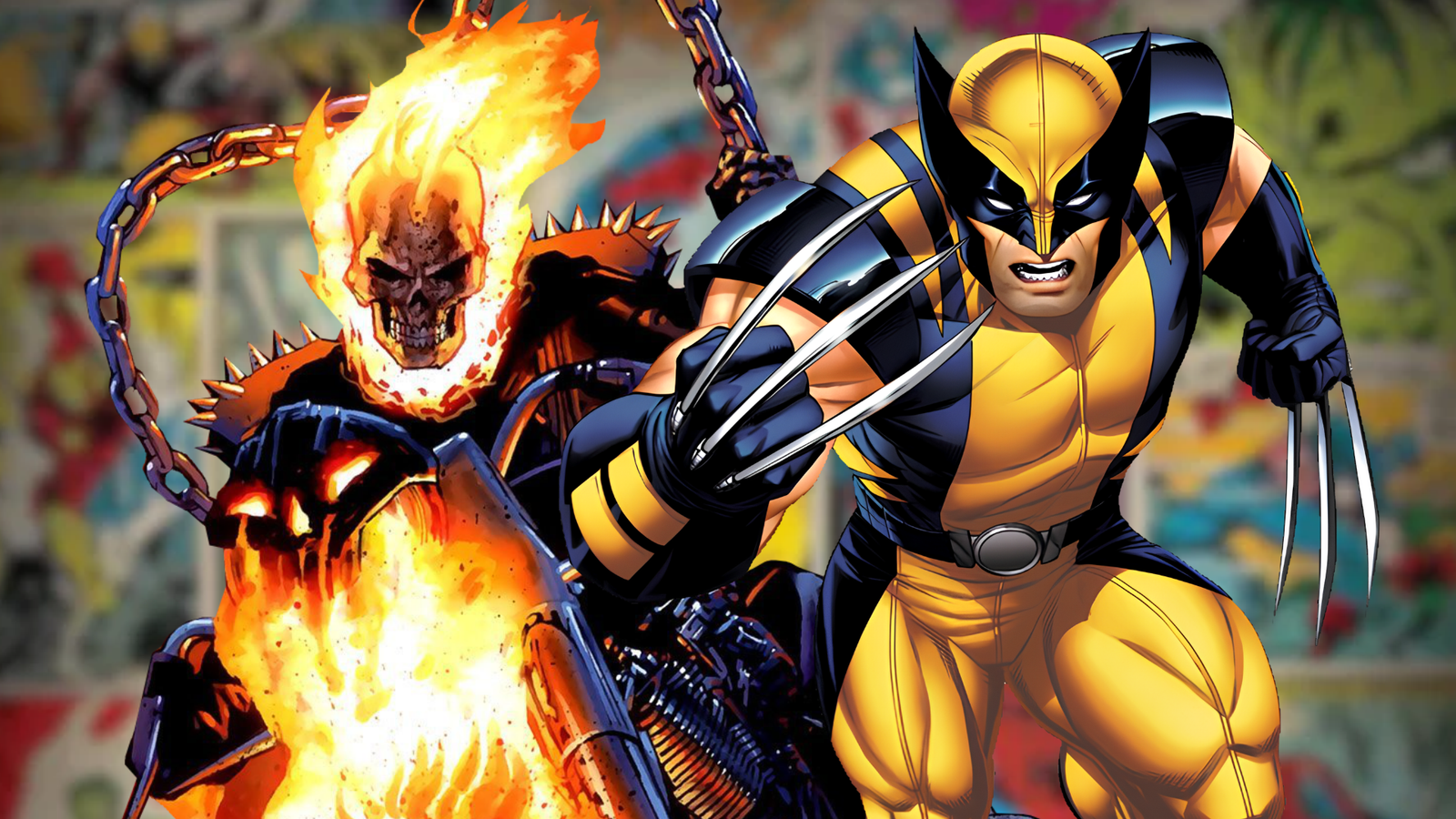
Custom Image by Casandra Ronning Published Oct 10, 2026, 10:30 PM EDT Casandra Ronning is a staff writer for Screen Rant's anime section. Since mid-2024, she has dedicated herself to expanding her knowledge and experience in the entertainment industry. She is most proud of conducting an exclusive interview with popular voice actor Stephanie Nadolny. Sign in to your ScreenRant account Not every comic hero is at their best when surrounded by allies. Some heroes work better when there’s no one around to slow them down, question them, or push them to follow a shared code of conduct. In some cases, these lone heroes are simply too unpredictable to fit into a coordinated team, or powerful enough not to need backup. Whether they avoid team-ups or prefer to work alone, these heroes and antiheroes do their best work when they can act on their own terms. While teams like the Justice League or the Avengers are often praised for their combined strength, that doesn’t mean that teamwork is always an advantage. Across DC, Marvel, and other publishers, heroes prove they’re more than enough for any challenge that comes their way. Silver Surfer The Silver Surfer is Norrin Radd, a former astronomer from Zenn-La who surrendered his freedom to become Galactus’ herald in order to save his home world. Gifted with the Power Cosmic, he eventually rebelled against his master after recognizing Earth’s value. Afterward, he spent years exiled on Earth before breaking free of the invisible cosmic barrier, allowing him to roam the universe as a wandering protector. While he has worked with several teams including the Fantastic Four and The Defenders, he largely works as a lone cosmic hero. Given his extraordinary abilities, including matter manipulation, energy projection and absorption, and many more, teamwork isn’t always necessary for him. The Question The Question is Vic Sage’s alter ego. He’s an investigative reporter and a street-level masked vigilante who confronts corruption in Hub City. While he was originally a staunch Objectivist, later stories reimagined him as a morally ambiguous philosopher who uses his martial arts expertise and special technology to fight for justice from the shadows. The Question is a paranoid vigilante who is very distrustful of most people, making teamwork nearly impossible. Along with his tendency to pursue conspiracies down to their smallest details, The Question simply works best on his own without having to coordinate with others. As a solo vigilante, he has the freedom to follow whatever evidence and leads without anyone tempering his investigations. Blade Eric Brooks, better known as Blade, is a dhampir, a half-human, half-vampire hybrid who dedicates his life to hunting the undead after losing his mother to the vampire Deacon Frost. With his enhanced physical abilities, mastery of martial arts and weaponry, and resistance to supernatural threats, he stands as Marvel’s greatest vampire hunter. While he has been on and led teams, Blade famously views his life mission as a curse and prefers to operate solo since anyone he works with could become a target. In addition to that, Blade is unique in that most vampiric abilities don’t have an effect on him, allowing him to confront threats that would otherwise incapacitate others. Ghost Rider Johnny Blaze became Ghost Rider after bargaining with Mephisto to save someone he loved, only to become bound to the Spirit of Vengeance itself. When transformed, Blaze becomes a supernatural enforcer who can wield hellfire, ride a mystical motorcycle, and use the Penance Stare, an attack that forces someone to feel every bit of suffering they inflicted on others. Given that Blaze hosts the Spirit of Vengeance, it’s very difficult for him to work on a team since whenever the entity takes full control, it only cares about punishing the guilty. While he can be very effective on a team, for the most part, his powers are designed for taking on and punishing individual wrongdoers. Rorschach Rorschach is Walter Kovacs’s masked identity, operating as a relentless vigilante in Watchmen. He’s deeply distrustful of society and scarred by a traumatic childhood, giving him a rather rigid view of justice. Rorschach also often investigates crimes that others would rather ignore or forget, making him a vigilante who refuses to look away from the darkest aspects of humanity. Rorschach refuses to obey laws and accept institutional authority, making meaningful teamwork rather difficult. He also won’t do anything to soften his methods for the sake of cooperation and usually takes on cases and investigations according to his own judgment. Some of his partnerships prove that he’s not incapable of working with others, but he’s arguably most effective when nobody can hold him back. Hellblazer John Constantine, best known as Hellblazer, is a British occult detective whose greatest weapons are his knowledge and ability to deceive others. He is haunted by the consequences of his past, particularly the Newcastle incident where Constantine’s hubris led to the loss of an innocent child. Even so, he continues to navigate a world of demons, sorcerers, and other supernatural forces as he does whatever he can in his power to protect the innocent. Given that his methods often depend on secrecy and manipulation, working with a team is especially difficult. Constantine regularly withholds information and exploits loopholes as he makes morally questionable choices and bargains to outmaneuver his opponents. Working with a team is impractical, as he wouldn’t be able to rely on his usual tactics without endangering others or casting doubt on his methods and goals. Moon Knight Marc Spector is a former mercenary with dissociative identity disorder who becomes the host of the Egyptian moon god, Khonshu, after a betrayal and being left for dead. Among his alters is Steven Grant and Jake Lockley, all of whom share the mantle of Moon Knight, a masked vigilante who brings justice to those who harm the innocent and fights other supernatural or mythological threats. With Moon Knight’s unpredictable internal dynamics, coordination is far more difficult, especially when control shifts between his identities during dangerous situations. His connection to the god Khonshu also places him at the center of a divine agenda that can override other priorities, making it best for him to work as a solo hero. The Punisher Frank Castle, also known as The Punisher, is a former Marine whose family was tragically murdered during a mob-related shooting, driving him to wage a relentless war against organized crime. Unlike most Marvel heroes, Castle has no superhuman abilities or specialized tech, instead relying on his military training, tactical planning, weapon mastery, and endurance to fight against evil and corruption. Given that Castle’s methods leave little to no space for compromise and that he refuses to surrender criminals for conventional justice, he works best when he can operate on his own terms. His discipline makes him incredibly effective independently, and he works best when he can plan his own operations, choose his own targets, and act without interference. Batman Batman is Bruce Wayne’s vigilante identity as he fights crime in Gotham City. Rather than relying on superhuman abilities, he uses detective work, technology, intimidation, and his training to take down criminals. He was driven to heroism after witnessing his parents’ murder as a child and is known for his strict refusal to kill. From the Caped Crusader to The Batman · Eight Questions How Well Do You Know Batman? “I’m Batman.” 🦌Bob & BillDetective Comics #27, 1939 🥘The Camp EraAdam West, 1966 🎣Burton & SchumacherKeaton to Clooney, 1989–97 💉The Dark KnightBale & Ledger, 2005–12 🕵The BatmanPattinson & Reeves, 2022– LIGHT THE BAT-SIGNAL → 01 Batman debuted in Detective Comics #27 in May 1939. Cartoonist Bob Kane received sole credit for creating the character for the next 76 years — on every comic, every TV series, every film — despite being only half of the real partnership. His uncredited collaborator wrote much of the original story, designed the cowl and cape, invented the name “Bruce Wayne,” named Gotham City, and helped create the Joker, the Penguin, the Riddler and Catwoman. DC finally added his name to all Batman credits in 2015. Who? AJerry Robinson BBill Finger CJoe Shuster DOtto Binder ✓ Correct! Bill Finger (1914–1974). Kane’s original 1939 pitch was a Superman-style figure in a red leotard with a domino mask and bat-wings; Finger talked him into the cowl, scalloped cape, gauntlets and grey-and-black colour scheme that have defined the character ever since. Finger also wrote Detective Comics #27 itself, named Bruce Wayne (after Robert the Bruce and Anthony Wayne), created Gotham as a stand-in for New York, and co-created most of the rogues’ gallery — while signing a 1939 contract that gave Kane exclusive byline credit. Kane received millions in royalties; Finger died poor and uncredited. After a 2014 documentary and a 2015 family campaign, Warner Bros. and DC added “Batman created by Bob Kane with Bill Finger” to every credit starting with Gotham (Fox), Batman v Superman (2016) and forward. ✗ Wrong. The answer is Bill Finger. Jerry Robinson (option A) really did co-create the Joker and Robin alongside Finger and Kane — he was the third member of the early studio — but the cowl, cape, “Bruce Wayne,” Gotham City and the actual script of Detective Comics #27 were Finger’s. Joe Shuster co-created Superman, not Batman. Otto Binder created Supergirl and Mary Marvel. Finger signed away his byline in 1939 and didn’t receive on-screen credit until 2015. NEXT → 02 Batman: The Movie — released in July 1966 between the first and second seasons of the ABC TV series, featuring the “Holy Whatever, Batman!” tone, the four super-villain team-up (Joker, Penguin, Riddler, Catwoman), the shark-repellent Bat-spray, and the Batmobile/Batboat/Batcopter — is generally considered the first theatrical Batman feature film. Two earlier 1940s movie serials don’t qualify as standalone features. Which actor played Batman in this first theatrical feature? AAdam West BLewis Wilson CRobert Lowery DMichael Keaton ✓ Correct! Adam West (1928–2017), with Burt Ward as Robin and Cesar Romero as the Joker. West played the role across 120 ABC episodes (1966–1968) and the 1966 theatrical feature, hammed up the camp tone to perfection, and then spent decades typecast before reclaiming the role in animated form (Batman: Return of the Caped Crusaders, 2016) and as Mayor West on Family Guy. The two traps are real: Lewis Wilson played Batman in Columbia’s 15-chapter 1943 serial Batman, and Robert Lowery played him in the 1949 sequel serial Batman and Robin — but those were Saturday-morning chapter plays, not standalone theatrical features. Michael Keaton’s Batman doesn’t arrive until Tim Burton’s 1989 film. ✗ Wrong. The answer is Adam West. The trap is real but technical: Lewis Wilson (1943) and Robert Lowery (1949) both played Batman in Columbia movie serials, but those were 15-chapter Saturday-morning serials, not theatrical features. Adam West’s 1966 Batman: The Movie — with the four-villain team-up and the shark-repellent Bat-spray — is the first standalone Batman feature film. Michael Keaton doesn’t arrive until 1989. NEXT → 03 Batman: The Animated Series (Fox Kids, 1992–1995) — the Bruce Timm/Eric Radomski production with the deco-noir “Dark Deco” backgrounds painted on black paper — is consistently ranked by fans and creators as the definitive screen Batman. Its central performance is so iconic that the actor reprised it across 30 years, every DC Animated Universe series, and a dozen Arkham-series video games. He died on November 10, 2022, and DC essentially treated his passing as the death of Batman’s voice. Name him. ATim Daly BKevin Conroy CMark Hamill DWill Friedle ✓ Correct! Kevin Conroy (1955–2022). Conroy’s key innovation, on his first audition for BTAS in 1991, was to give Bruce Wayne and Batman two distinct voices — Bruce as the lighter, charming playboy and Batman as the deeper, harder-edged growl — a take that became the industry default and was openly copied by Christian Bale, Ben Affleck and Robert Pattinson on screen. He played the role for 31 years, across BTAS, Superman: TAS, Justice League, Justice League Unlimited, Batman Beyond (as the elderly Bruce), and every Rocksteady Arkham game. The trap is genuine: Mark Hamill voiced the Joker opposite Conroy on BTAS and is just as legendary in that role. Tim Daly voiced Superman; Will Friedle voiced Terry McGinnis in Batman Beyond. Conroy died in November 2022 at 66. ✗ Wrong. The answer is Kevin Conroy. Mark Hamill (option C) is the giant trap — he voiced the Joker opposite Conroy on BTAS for 30 years and is widely considered the definitive screen Joker — but Batman was Conroy. Tim Daly voiced Superman in the DCAU; Will Friedle voiced Terry McGinnis in Batman Beyond, with Conroy still playing the elderly Bruce. Conroy died November 10, 2022. NEXT → 04 Jack Nicholson’s Joker in Tim Burton’s Batman (1989) earned him an estimated $60–$90 million from a film for which his actual on-screen salary was a fairly modest $6 million — making it, dollar-for-dollar, one of the most famously lucrative single roles in Hollywood history. He achieved this by negotiating an unusual deal structure that other actors immediately tried (and largely failed) to copy. What was it? AA flat $50 million bonus on opening weekend success BA no-cut equity stake in Warner Bros. itself CA percentage of box-office gross AND merchandise royalties DA fixed-rate-per-ticket micro-royalty on every theatrical screening ✓ Correct! Nicholson took a $6 million base, a piece of the box-office gross (so-called “first-dollar gross” rather than net profits, which Hollywood accounting has a habit of vapourising) AND a percentage of Batman merchandising — the toys, posters, t-shirts, lunch boxes, video games and ride tickets. Batman (1989) grossed $411 million theatrically and unleashed the largest superhero merchandising wave in history, and Nicholson’s royalties on it have reportedly continued accruing for decades. His agent Sue Mengers, and his attorney’s “back-end participation” structure, became the gold standard talent-deal template that A-listers like Tom Cruise and Robert Downey Jr. would later use. Nicholson also negotiated top billing over Michael Keaton (despite Batman being the title character) and limited shoot days. It’s the most-copied bad-guy deal in Hollywood. ✗ Wrong. The answer is C — a percentage of box-office gross plus merchandising royalties. The $6 million base salary was relatively modest by 1989 star standards; the magic was the back-end participation in both ticket sales and the unprecedented Batman toy/poster/lunchbox merchandise wave, which has reportedly continued paying out for decades. Tom Cruise and RDJ later borrowed the same gross-points-plus-merch template. There was no $50M opening-weekend trigger, no equity stake in Warners, and no per-screening micro-royalty. NEXT → 05 After Ben Affleck stepped down from his planned solo Batman film, Warner Bros. handed the project to a new director who reconceived it as a noir-detective serial-killer story modelled on Se7en and Zodiac, runs 2h 56min, casts Robert Pattinson as a brooding second-year Bruce Wayne, and gives Paul Dano’s Riddler a Zodiac-style cipher gimmick. The Batman (2022) grossed $772 million worldwide. Who directed it? AZack Snyder BChristopher Nolan CTim Burton DMatt Reeves ✓ Correct! Matt Reeves — the Cloverfield (2008), Let Me In (2010), and Dawn of the Planet of the Apes (2014) / War for the Planet of the Apes (2017) director. Reeves co-wrote The Batman with Peter Craig, leaned hard into a Fincher-noir detective tone (the Riddler is essentially Zodiac), and got Pattinson, Zoë Kravitz (Catwoman), Colin Farrell (an unrecognisable Penguin), Paul Dano (Riddler) and Jeffrey Wright (Gordon). The film established its own continuity separate from the DCEU/James Gunn DCU. The Penguin (HBO/Max, 2024) followed as a Reeves-produced spin-off, and The Batman: Part II is currently scheduled for 2026. ✗ Wrong. The answer is Matt Reeves — the Cloverfield, Let Me In and Planet of the Apes-reboot director. Nolan made the Dark Knight trilogy (2005–2012); Snyder made Batman v Superman (2016) and Justice League (2017/2021) with Affleck’s Batman; Burton made the 1989/1992 Keaton films. The Batman (2022) is Reeves’s, in its own continuity, with The Penguin (2024) as the spin-off and Part II in 2026. NEXT → 06 Joel Schumacher’s Batman & Robin (1997) — with Bat-nipples on the suit, Arnold Schwarzenegger’s Mr. Freeze spitting ice puns (“Let’s kick some ice!”), Uma Thurman’s Poison Ivy, Alicia Silverstone’s Batgirl, and an estimated $238 million box-office failure on a $125 million budget — is widely regarded as one of the worst superhero films ever made. It killed the live-action Batman franchise for eight years until Batman Begins (2005). Who played Batman in it? AGeorge Clooney BVal Kilmer CMichael Keaton DChristian Bale ✓ Correct! George Clooney — in his only outing as Bruce Wayne, between his ER fame and Out of Sight. Clooney has publicly apologised for the film for nearly thirty years; he told Entertainment Weekly he “destroyed the franchise” and routinely thanks fans for their hostility. The trap is Val Kilmer, who played Batman in the previous Schumacher film, Batman Forever (1995) — he was originally signed for two but exited due to scheduling and reported disputes with Schumacher. Keaton played Batman in Burton’s 1989 and 1992 films (and returned in The Flash, 2023). Bale arrived eight years later in Nolan’s Batman Begins (2005). The Bat-nipples were Schumacher’s, the ice puns Schwarzenegger’s, the apology Clooney’s. ✗ Wrong. The answer is George Clooney. Val Kilmer (option B) was Batman in the previous Schumacher film, Batman Forever (1995) — he then exited and Clooney took over for Batman & Robin. Keaton was Batman in Burton’s 1989/1992 films (and returned in The Flash, 2023). Bale arrived in Nolan’s Batman Begins (2005), eight years after Batman & Robin killed the franchise. NEXT → 07 Cesar Romero’s Joker on the 1966–1968 ABC Batman series — white grease-paint, green wig, red lipstick, manic giggle — remains one of the most-cited comedic TV villains in American history. Romero, a leading-man matinée idol since the 1930s, agreed to the role on one condition: he refused to do a specific thing for the makeup. You can still see what he refused if you look closely. What did Romero refuse? ATo wear the green wig (he wanted his own hair dyed) BTo speak in a falsetto voice CTo shave his moustache DTo wear purple gloves ✓ Correct! Romero refused to shave his trademark moustache — reportedly a vanity rule he’d had since the 1930s — so the makeup department simply caked white grease-paint over it. If you watch the 1966 episodes or Batman: The Movie (1966) on Blu-ray, you can clearly see the moustache bristles poking through the white paint above his lip. It’s one of TV’s most-cited “visible-prosthetic” quirks — later parodied by Burt Ward and explicitly nodded to in the 2016 animated Batman: Return of the Caped Crusaders (Romero was already dead, having passed in 1994, but the animation reproduces the moustache underneath the makeup). Romero played the role for all three TV seasons and the 1966 feature. ✗ Wrong. The answer is shaving his moustache. Romero had had his trademark Latin-lover moustache since the 1930s, refused to lose it for any role, and the makeup department simply painted white grease-paint over it — if you look closely on Blu-ray you can see the bristles poking through under his lip. The wig, the high-pitched giggle and the purple gloves were all things he gladly did. NEXT → 08 Todd Phillips’s Joker (2019) — the standalone, R-rated, $1.07-billion-grossing Joaquin Phoenix vehicle that exists outside any DC continuity — was nominated for 11 Academy Awards, the most of any comic-book-derived film at the time. It won Best Actor for Phoenix. It also won exactly one other Oscar that night. Which? ABest Director (Todd Phillips) BBest Original Score (Hildur Guðnadóttir) CBest Adapted Screenplay (Phillips & Silver) DBest Picture ✓ Correct! Best Original Score, Hildur Guðnadóttir — the Icelandic cellist and composer who, in the same awards cycle, won the Emmy and Grammy for Chernobyl (HBO, 2019). Joker’s score (anchored by the haunting cello motif during Arthur Fleck’s bathroom dance) was her breakthrough; she became the first solo woman to win Best Original Score since Marilyn Bergman in 1984 (and the fourth ever). Phillips lost Best Director to Bong Joon-ho for Parasite, which also won Best Picture, beating Joker’s nomination. The film’s screenplay nomination was Adapted (because it’s based on existing DC IP), not Original — option C names the right category but it lost to Jojo Rabbit. ✗ Wrong. The answer is Best Original Score — Hildur Guðnadóttir (also the Chernobyl composer that year). She became the fourth solo woman ever to win the category. Phillips lost Best Director to Bong Joon-ho (Parasite); Best Picture also went to Parasite; the screenplay nomination was Adapted (not Original) and lost to Jojo Rabbit. Phoenix’s Best Actor + Guðnadóttir’s Best Original Score are Joker’s two 2020 Oscar wins. REVEAL MY RATING → The Bat-Signal Has Faded · Final Scorecard Your Gotham Standing 🦌 / 8 World’s Greatest Detective — or a Gotham red herring? ⤴ ROUND TWO Despite his reputation as a solitary hero, Batman has repeatedly built relationships with allies, members of the Bat-Family, and he even has a place on DC’s Justice League. That said, his trauma and controlling nature make him more comfortable with solo operations, especially when stealth and precise planning are needed. Even though his greatest character development often comes from him learning to trust in others, he arguably works best as a lone hero. Wolverine Wolverine, also known as Logan, is a mutant who possesses a regenerative healing factor, enhanced senses, an adamantium-laced skeleton, mastery of martial arts, and retractable claws, making him a dangerous fighter and hunter. Despite his brutality, he is deeply loyal to those he protects and stands alongside. While he is a central member of the X-Men, has teamed up with other heroes many times, and serves as an outstanding mentor and leader, he also stands as an exceptional solo hero. He can pursue dangerous targets entirely on his own, endure extreme injuries, and fight with a ferocity that’s hard for teammates to match.
10 Heroes Who Are Better Alone Than On A Team
Full Article
Original Source
Read the full article at Screenrant →KhanList aggregates and links to publicly available news content. We do not host full articles from third-party sources. Always verify important information with original sources.