
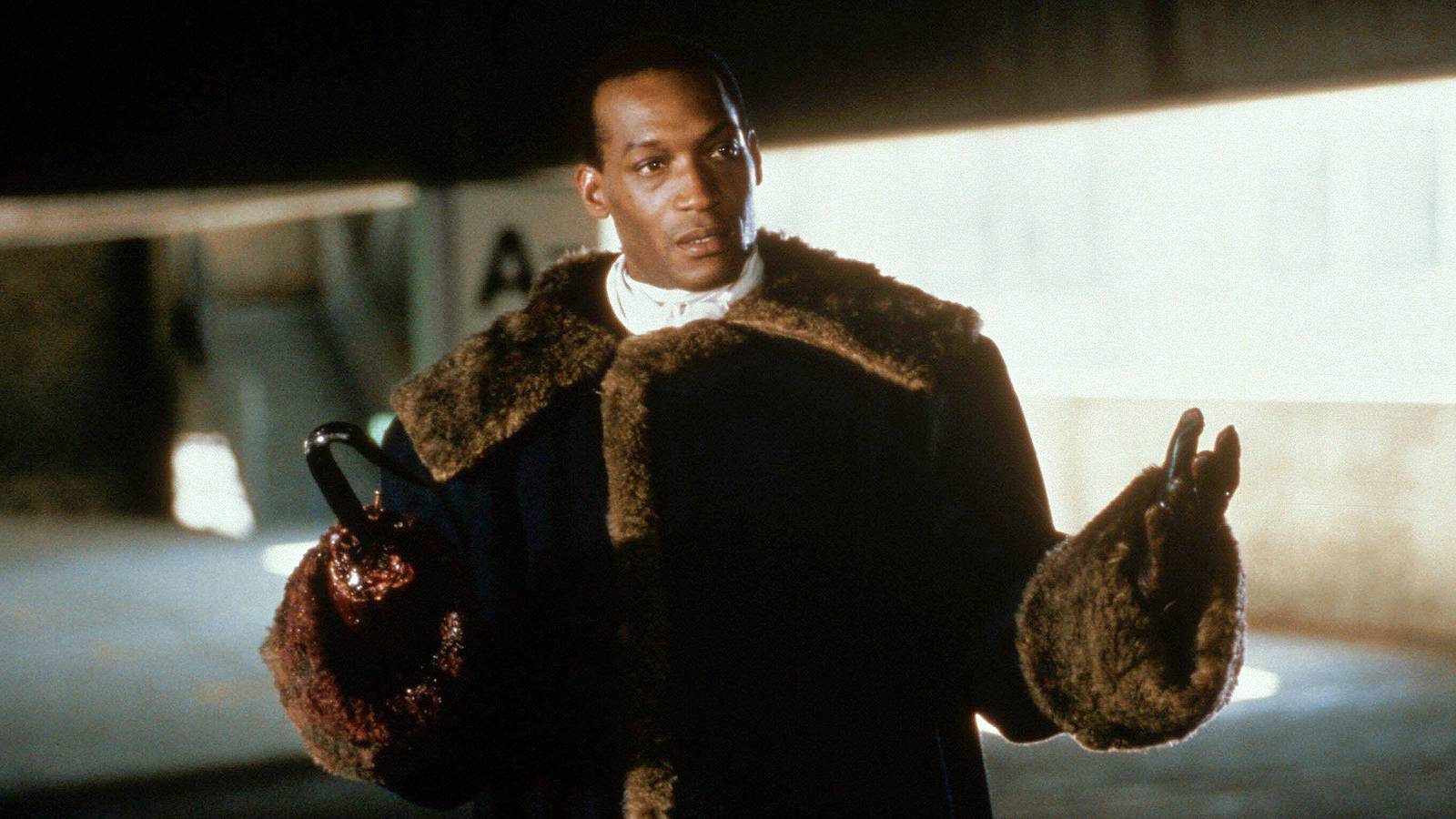
Horror movies have a particularly difficult job when they begin. Before the audience knows the characters, understands the rules, or has any reason to care about what happens, the opening moments have to establish a mood and create a reason to keep watching. A few words can establish a threat, introduce a mythology, misdirect the audience, or make an otherwise ordinary situation suddenly feel sinister. Some of horror's most memorable opening lines are frightening because they immediately reveal something terrible. Others are effective precisely because they sound harmless, strange, or even welcoming. There are even lines that acquire greater significance as the movie unfolds, transforming a seemingly simple statement into a thematic warning. From a telephone greeting that turns an everyday conversation into a nightmare to a cheerful invitation to visit a murderous attraction, these lines demonstrate how efficiently horror can establish its identity. Indeed, the greatest examples tell the audience, sometimes in just a few words, exactly what kind of nightmare they are about to enter. “The Film Which You Are About To See Is An Account Of The Tragedy Which Befell A Group Of Five Youths...” The Texas Chain Saw Massacre (1974) Before Sally Hardesty and her companions begin their ill-fated journey through rural Texas, The Texas Chain Saw Massacre presents a grave narration delivered by John Larroquette. The narrator claims that the movie recounts the tragedy of five young people, before promising that their ordinary summer journey will become a nightmare. This is delivered with a flawless imitation of documentary news sequences. The wording (and accompanying text crawl) sounds official, and pushes the notion that the movie is based upon real-world events. That false documentary framing gives the violence an unsettling sense of credibility. The Texas Chainsaw Massacre popularized the trope of filmakers pretending their horror movie is based upon true events. While real-world killer and human jumpsuit-maker Ed Gein certainly influenced Leatherface's characterization, Texas Chainsaw is not a retelling of his life. Yet, the authoritative voice establishes that tone, making Texas Chainsaw feel even scarier before the movie even starts. “They Will Say That I Have Shed Innocent Blood. What's Blood For If Not For Shedding?” Candyman (1992) Candyman begins with Tony Todd's Candyman seductively speaking over an image of swarming bees, immediately introducing the character's distinctive voice and philosophy. Candyman's opening line is particularly chilling because he does not speak like an ordinary killer announcing his intentions. He sounds almost philosophical. "What's blood for if not for shedding?" reframes his killings as something inevitable and almost poetic, revealing the supernatural killer's ability to turn violence into mythology. That distinction is crucial to Candyman. The character is not frightening solely because he possesses a hook and kills people. He is frightening because he exists as a myth. He understands that stories keep monsters alive, and his poetic delivery establishes the film's fusion of urban legend, folklore, violence, and belief in just a few seconds. "Hello?" Scream (1996) Scream's horrifying opening sequence begins with Casey Becker (Drew Barrymore) simply answering her telephone. Her first word is an entirely mundane "Hello?" as an unidentified caller begins what appears to be an innocent wrong-number conversation. The caller's increasingly personal questions eventually turn the exchange into a deadly game, setting up Wes Craven's iconic opening. "Hello?" is so effective because of how ordinary it is. There is no ominous declaration, supernatural warning, or theatrical introduction. Casey is simply answering the phone, something the audience has done countless times. Casey subsequently answers the phone with "Hello?" in increasingly panicked ways, making even uttering the word unbearably tense. The word also establishes Scream’s central interest in the relationship between horror and genre conventions. A telephone call is an everyday object that countless thrillers have already made threatening. Scream’s opening scene pays tribute in particular to When A Stranger Calls, which opens similarly. “The Child Is Dead.” The Omen (1976) The Omen opens in Rome, where Father Spiletto tells Robert Thorn that his newborn son has died. Robert hears Spiletto’s words ringing through his ears as he races to the hospital. This is the establishing tragedy that prompts Robert's decision to secretly adopt another newborn – who is actually the Antichrist. The Omen therefore roots the narrative in tragedy before Damien is even introduced. His arrival is not presented as a happy event, but one born from death. The line itself is brutally clinical, establishing a mournful tone from the very beginning. It’s an extremely dark place to thrust an audience immediately into, and one that cannot be explained away by supernatural means. The Omen begins with an ordinary human tragedy from which all subsequent infernal evil will emerge. “What Went We Out Into This Wilderness To Find?” The Witch (2015) Robert Eggers' The Witch opens with William (Ralph Ineson) speaking before a Puritan court. He questions why his family crossed the Atlantic, invoking their religious purpose and asking what they went there to find. The family is subsequently banished from the settlement for their religious zealotry and forced to live on the edge of the forest. William’s opening monologue instantly makes the wilderness both a physical location and a spiritual question. William believes his family's separation from the community represents religious purity, yet the audience is about to watch that isolation become the source of their destruction. Vitally, the opening scene lingers on Thomasin's face. This conveys that the narrative will be focussed on Thomasin, but will be shaped by the actions of her father. Eggers also uses the wording to establish the film's period authenticity. The archaic syntax places the audience inside the worldview of a seventeenth-century Puritan family. It establishes The Witch as a horror movie about faith and isolation fear, rather than simply a family that encounters a witch. “Howdy Folks! Like Blood, Violence, Freaks Of Nature? Well Then Come On Down To Captain Spaulding's!” House Of 1000 Corpses (2003) Rob Zombie introduces House of 1000 Corpses with Captain Spaulding (Sid Haig), who enthusiastically invites customers to his Museum of Monsters and Mad-Men. The black-and-white advertisement offers blood, violence, freaks of nature, all delivered with the energy of a carnival barker. The opening line transforms the audience into one of Spaulding’s customers, inviting viewers into the gory world. This also gives House of 1000 Corpses its grimy carnival atmosphere and establishes the collision between entertainment and brutality that runs throughout Zombie's filmmaking. Mentioning the Alligator Boy, the Murder Ride, and fried chicken gives Spaulding's speech the texture of a real roadside attraction while seeding Zombie’s dark humor. It also introduces the movie's exaggerated aesthetic before its violence begins. House of 1000 Corpses is lurid, excessive, filthy, and theatrical, and Spaulding's opening pitch tells the audience exactly that. “How Do You Do? Mr. Carl Laemmle Feels It Would Be A Little Unkind To Present This Picture Without Just A Word Of Friendly Warning.” Frankenstein (1931) Before James Whale's Frankenstein begins its story, actor Edward Van Sloan steps through a curtain and directly addresses the audience. He explains that Universal Pictures producer Carl Laemmle believes viewers deserve a warning before being shown the story of Victor Frankenstein. The prologue was added after the film had been completed and served partly to address concerns about the disturbing nature of the material and its religious implications. Van Sloan adopts the tone of a courteous host, making the warning of horror sound like a matter of good manners. It's a real anachronism, and adds a strange uncanniness to Frankenstein when watched today. It's also oddly charming, accentuating the cozy horror charm that runs through many of the Universal Monster movies. It's become part of the movie's lore and a delightful introduction to an iconic movie. “That's Not A Dog!” The Thing (1982) John Carpenter's The Thing begins with a Norwegian helicopter pursuing a seemingly ordinary Husky across the Antarctic snow. The frantic gunman repeatedly attempts to kill the animal, screaming a warning, "That's not a dog! It's some sort of thing! It's imitating a dog!" before the American researchers shoot the gunman. The only problem is that the gunman is speaking Norwegian and none of the Americans understand him. Unbeknownst to them, and the audience, this line gives away the entire movie. The Husky is indeed the creature in disguise, and the unwitting Americans save it, sealing their own doom. It’s such a delicious detail and many didn’t know about until some time after The Thing was released. Carpenter literally tells audiences what’s happening, but nobody understands it. “Santa?” Terrifier 3 (2024) Terrifier 3 begins with a deliberately out-of-context Christmas-night sequence involving a child who hears noises downstairs. It creates an innocent holiday setup before Art the Clown arrives in a Santa suit and turns the sequence into one of the franchise's most brutal set pieces. "Santa?" is such a great opening line because the word doesn't carry any inherent horror, but audiences know precisely where the scene is heading. The line therefore becomes a sick joke, playing off the audience's expectations and twisted sense of humor — a prerequisite for Terrifier fans. Damien Leone specifically designed the cold open to present Art immediately, even before Terrifier 3 explains how he acquired the Santa costume. It thrusts audiences into Art's sick world with no build-up, making the scene more upsetting, more disgusting, and even funnier. “Nosferatu. Doesn't The Name Sound Like The Midnight Call Of The Death Bird?” Nosferatu (1922) Image via Film Arts Guild F. W. Murnau's Nosferatu opens with an intertitle presenting the mysterious name "Nosferatu" as something that sounds like the call of a death bird at midnight. The text then warns against even speaking the name: "Do not utter it, or the images of life will fade – into pale shadows and ghostly dreams will rise from your heart and feed your Blood." Nosferatu opens by explaining why the monster should be feared before he even appears on-screen. It highlights his more monstrous qualities, which helps create some differentiation to Count Dracula. That said, the beautiful prose immediately recalls Dracula's literary origins and partly roots the movie in that tradition. Nosferatu's opening also hints at the movie's use of shadows, essentially explaining what the movie will entail, what it's based on, and how it's different. Few opening lines in horror are this succinct while also being so beautiful. Release Date February 16, 1922 Runtime 95 Minutes Director F. W. Murnau Writers Henrik Galeen
10 Greatest Opening Lines In Horror Movie History
Full Article
Original Source
Read the full article at Screenrant →KhanList aggregates and links to publicly available news content. We do not host full articles from third-party sources. Always verify important information with original sources.