
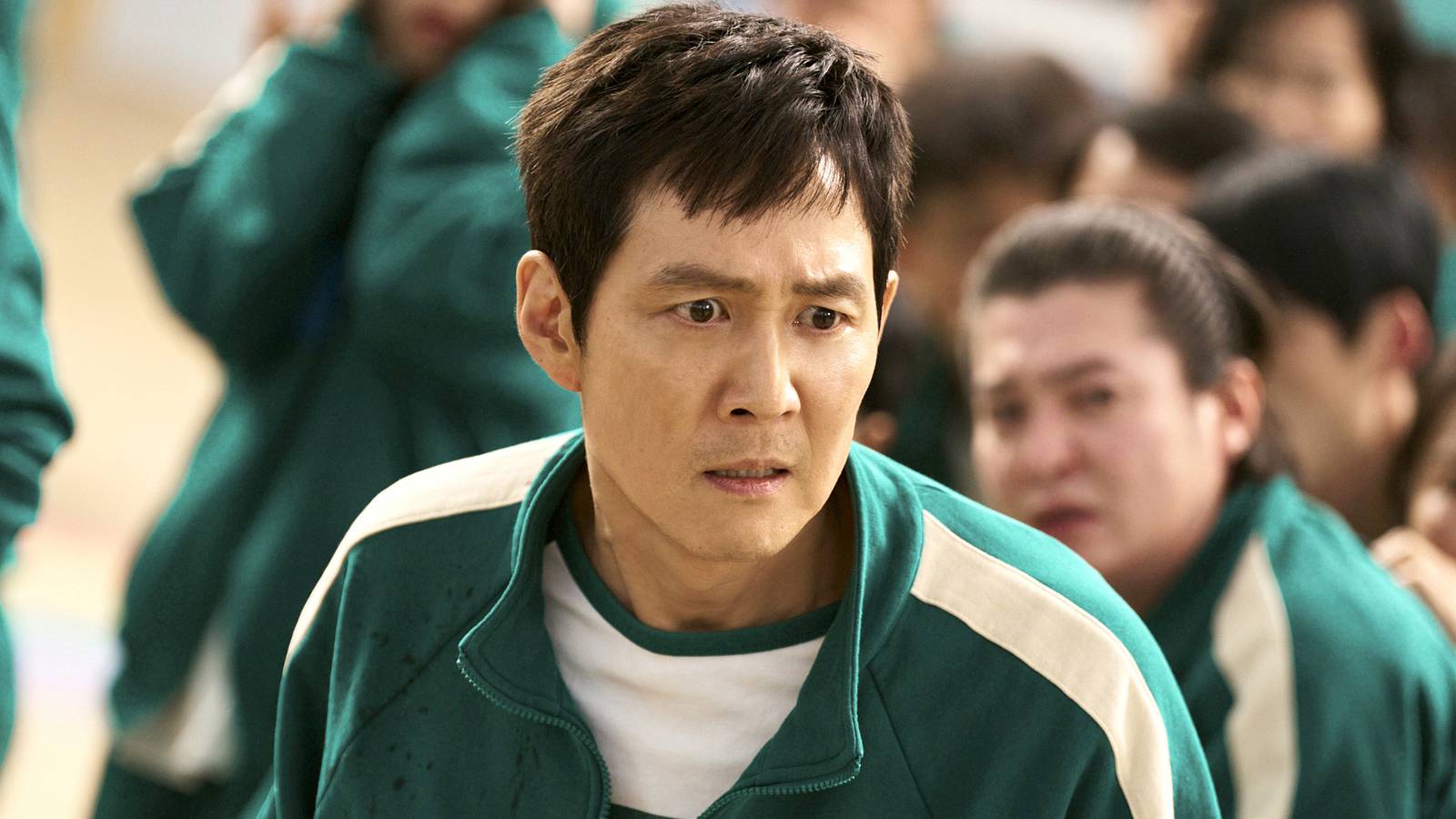
Image via Netflix Published Oct 10, 2026, 1:04 PM EDT Dyah (pronounced Dee-yah) is a Senior Author at Collider, responsible for both writing and transcription duties. She joined the website in 2022 as a Resource Writer before stepping into her current role in April 2023. As a Senior Author, she writes Features and Lists covering TV, music, and movies, making her a true Jill of all trades. In addition to her writing, Dyah also serves as an interview transcriber, primarily for events such as San Diego Comic-Con, the Toronto International Film Festival, and the Sundance Film Festival. Dyah graduated from Satya Wacana Christian University in October 2019 with a Bachelor's degree in English Literature, concentrating on Creative Writing. On March 2026, Dyah graduated with Master's degree in English Literature Studies, with a thesis on intersectionality in postcolonial-feminist studies in Asian literary works. Born and raised between Indonesia and Singapore, Dyah is no stranger to different cultures. She now resides in the small town of Kendal with her husband and four cats, where she spends her free time cooking or cycling. Sign in to your Collider account Many K-dramas have stood the test of time, but only a select few have earned their rightful place as masterpieces. K-dramas have been a part of Korean television since the post-war era, and over the years, these dramas have evolved to reflect the generations they come from. Today, K-dramas continue to build on the story tropes established by their predecessors while putting their own spin on them. From mixing genres and experimenting with different characters to challenging societal expectations, modern K-dramas have found new ways to tell familiar stories. From a satire of academic obsession to a slice-of-life series celebrating the beauty of ordinary life, here are the 10 greatest K-drama TV masterpieces of the 21st century, ranked. 10 'Boys Over Flowers' (2009) Image via KBS2 If there’s one universally beloved K-drama responsible for the 21st-century Korean Wave, it’s Boys Over Flowers. After saving a student from suicide, Geum Jan-di (Koo Hye-sun) earns a scholarship to elite Shinhwa High. It doesn’t take long for the powerful F4 gang to notice Jan-di, who becomes their bullying target because of her working-class background. But Jan-di isn’t one to be underestimated. From rich boy vs. poor girl to enemies-to-lovers, Boys Over Flowers packs in nearly every K-drama trope that would define the genre. Its outrageous twists, larger-than-life characters, and messy romance make it an addictive teen melodrama. At the heart of all that chaos, however, is Jan-di, whose refusal to bow to the entitled F4 transforms her into the ultimate underdog. 9 'Winter Sonata' (2002) Image via Pan Entertainment Winter Sonata follows Joon-sang (Bae Yong-jun) and Yoo-jin (Choi Ji-woo), two high school students whose romance is cut short when Joon-sang gets into a devastating accident. Although he survives, he loses his memories, including everything he experienced in Korea and his relationship with Yoo-jin. Ten years later, the two reunite, but neither realizes just how closely their pasts are connected. Before the 21st century, K-dramas were famous for stories of loss and heartbreak. Winter Sonata retained the melodrama of the ’90s while adding a trendier Y2K touch through its youthful fashion, polished visuals, and modern Seoul setting. Its simpler approach gives room for the heartbreak to take the spotlight, with the cast delivering genuine performances as two unfortunate lovers. 8 'Princess Hours' (2006) Image via Eight Peaks In Princess Hours, ordinary art student Shin Chae-kyeong (Yoon Eun-hye) is far from princess material. However, her world changes overnight when she is betrothed to Crown Prince Lee Shin (Ju Ji-hoon), a cold and arrogant heir she has little interest in. Forced into an arranged marriage, the unlikely couple must play the perfect pretend couple while struggling to see eye to eye. Princess Hours changed how audiences viewed royalty. While these kinds of stories are often told through a Western lens, the genre-defining K-drama offered a glimpse into a fictional modern South Korean monarchy. Its unique traditions and customs set it apart, showing how Korean royalty, especially the younger generations, might balance centuries-old expectations with the realities of modern life. 7 'SKY Castle' (2018–2019) Image via JTBC SKY Castle offers a microscopic look at South Korea’s upper-class society, where status is measured not only by wealth but by how successfully parents raise their children. For these families, that means securing admission to the country’s elite SKY universities. As academic success becomes the ultimate measure of prestige, parents will do almost anything to guarantee their children a future among the privileged. Good education is one thing, but SKY Castle turns society’s obsession with Korea’s three most prestigious universities into something feverish. As parents weaponize tutors, bribery, manipulation, and deception, their academic ambitions push children to the brink. Straight As and acceptance letters become meaningless when pursued at the cost of morality, happiness, and human empathy. 6 'Hospital Playlist' (2020–2021) Image via Netflix Working in the medical field is no joke, but Hospital Playlist proves that happiness can still be found even when lives are at stake. Five doctors first became friends during medical school and, now in their forties, continue working together at Yulje Medical Centre. Despite specializing in different fields, their decades-long friendship remains the heart of their lives. Hospital Playlist combines the gravity of Grey’s Anatomy with the lighthearted sitcom appeal of St. Denis Medical, creating a medical K-drama show about adult friendship in one of the most demanding professions. The medical cases carry real weight, and failed surgeries can leave doctors grieving. Yet even in those difficult moments, their friendship provides the support they need to keep going. Collider Exclusive · TV Medicine Quiz Which Fictional Hospital Would You Work Best In? The Pitt · ER · Grey's Anatomy · House · Scrubs Five hospitals. Five completely different ways medicine goes sideways on television — brutal, chaotic, romantic, brilliant, and ridiculous. Only one of them is the ward your instincts were built for. Eight questions will figure out exactly where you belong. 🚨The Pitt 🏥ER 💉Grey's 🔬House 🩺Scrubs FIND YOUR HOSPITAL → 01 A critical patient comes through the door. What's your first instinct? Medicine under pressure reveals who you actually are. AStay completely present — block everything else out and work through it step by step, right now. BTriage fast and delegate — get the right people on the right problems immediately. CTrust my gut and move — I work best when I stop overthinking and just act. DAsk the question everyone else is ignoring — what's the thing that doesn't fit? ETake a breath, make a joke to cut the tension, and then get to work — panic helps no one. NEXT QUESTION → 02 Why did you go into medicine in the first place? The honest answer says more about you than the one you'd give in an interview. ABecause I wanted to be where it matters most — right at the edge, when someone's life is actually on the line. BBecause I wanted to help people — genuinely, one patient at a time, in a system that makes it hard. CBecause I was drawn to the intensity of it — the stakes, the drama, the feeling of being fully alive. DBecause medicine is the most interesting puzzle there is — and I needed a problem worth solving. EBecause I wanted to make a difference — and also, honestly, I didn't know what else to do with my life. NEXT QUESTION → 03 What do you actually want from the people you work with? Who you want beside you under pressure is who you are. ACompetence and calm — I need people who don't fall apart when things get bad. BTrust and reliability — I want to know that when I pass something off, it's handled. CConnection — I want colleagues who become family, even if that gets complicated. DIntelligence and the willingness to be challenged — I have no interest in people who just agree with me. EFriendship — people I actually like spending twelve hours a day with, because those hours are going to happen either way. NEXT QUESTION → 04 You lose a patient you fought hard to save. How do you carry it? Every doctor who's worked a long shift has had to answer this question. AI carry it. All of it. I don't look for ways to put it down — that weight is part of doing this work honestly. BI process it and move — you have to, or the next patient suffers for the one you just lost. CI feel it deeply and lean on the people around me — I don't think you're supposed to handle that alone. DI go back over every decision — not to punish myself, but because I need to understand what I missed. EI grieve it genuinely, find some way to laugh about something unrelated, and try to be kind to myself — imperfectly. NEXT QUESTION → 05 How would your colleagues describe the way you work? Your reputation on the floor is usually more accurate than your self-image. AIntense and completely present — no small talk during a shift, but exactly who you want there. BSteady and dependable — not the flashiest in the room but never the one who drops something. CPassionate and occasionally chaotic — brilliant on the hard cases, prone to drama everywhere else. DBrilliant and difficult — right more often than anyone else, and everyone knows it, including me. EWarm and self-deprecating — not the most intimidating presence, but genuinely good at this and easy to like. NEXT QUESTION → 06 How do you feel about hospital protocol and procedure? Every institution has rules. What you do with them is a choice. AProtocol is the floor, not the ceiling — I follow it until the patient needs something it can't provide. BI respect it — the system is broken in places, but the structure is there for a reason and I work within it. CI follow it until my instincts tell me not to — and my instincts are usually right, even when they cause problems. DRules are for people who haven't thought hard enough about when to break them. EI try to follow it and mostly do — with a few memorable exceptions that still come up in meetings. NEXT QUESTION → 07 What does this job cost you personally? Nobody works in medicine without paying a price. What's yours? AEverything outside these walls — I've given this job my full attention and the rest of my life has gone around it. BMy idealism, mostly — I came in believing the system could be fixed and I've made a complicated peace with that. CStability — my personal life has been as chaotic as the OR, and that's not entirely a coincidence. DMy relationships — I am not easy to know, and the people who've tried to would probably agree. EMy sense of gravity — I use humour as a coping mechanism, which not everyone appreciates in a hospital. NEXT QUESTION → 08 At the end of a long shift, what keeps you coming back? The answer to this question is the most honest thing about you. AThe fact that it's real — that nothing else I could be doing would matter this much, right now, today. BThe patients — individual human beings who needed something and got it because I was there. CThe people I work with — I have walked through impossible things with these people and I'd do it again. DThe next unsolved case — there's always another puzzle, and I'm not done yet. EBecause despite everything — the exhaustion, the loss, the absurdity — I actually love this job. REVEAL MY HOSPITAL → Your Assignment Has Been Made You Belong In…Your answers have pointed to one fictional hospital above all others. This is the ward your instincts, your temperament, and your particular brand of dysfunction were built for. The PittYou are built for the most unsparing version of emergency medicine television has ever shown — one that puts you inside a single fifteen-hour shift and doesn't let you look away. You need your work to be real, not romanticised — meaning over drama, honesty over aesthetics. You find purpose inside the work itself, not in the chaos surrounding it. You've made peace with the fact that this job takes from you constantly, and gives back in ways that are harder to name. Pittsburgh Trauma Medical Center demands exactly that kind of person — and you would not want to be anywhere else. ERYou are the person who keeps the whole floor running — not the most brilliant in the room, but possibly the most essential. You show up, do the work, absorb the losses, and come back the next day without needing the job to be anything other than what it is. You care about patients as individual human beings, not as cases to solve or dramas to live through. You believe in the system even when it fails you — and you understand that emergency medicine is about holding the line just long enough. ER is television about endurance. You have it. Grey's AnatomyYou came to medicine with your whole self — your ambition, your emotions, your relationships, your history — and you have never quite managed to leave any of it at the door. You feel things fully and form deep attachments to the people you work with. Your personal and professional lives are permanently, chaotically entangled — and that entanglement drives both your greatest disasters and your most remarkable saves. You understand that extraordinary medicine often happens at the intersection of clinical skill and profound human connection. It's messy at Grey Sloan. You would not have it any other way. HouseYou are drawn to the problem above everything else — the symptom that doesn't fit, the diagnosis hiding underneath the obvious one. You're not primarily motivated by the patient as a person — though you are capable of caring, even if you'd deny it. You work best when the stakes are highest and the standard answer is wrong. Princeton-Plainsboro exists to house one extraordinary, impossible mind — and everyone around that mind is there because they're smart enough to keep up. The only way forward here is to think harder than everyone else in the room. That is exactly what you do. ScrubsYou understand that medicine is tragic and absurd in almost equal measure — and that the only sane response is to hold both of those things at the same time. You are warm, self-aware, and funnier than most people in your field. You use humour to get through terrible moments — and at Sacred Heart, that's not a flaw, it's a survival strategy. You lean on the people around you and let them lean back. The laughter and the grief are genuinely inseparable here. Scrubs is a show about learning to become someone worthy of the job. You are still very much in the middle of that process — which is exactly right. ↻ RETAKE THE QUIZ 5 'The Glory' (2022–2023) Image via Netflix Years after enduring horrific abuse at the hands of her classmates, Moon Dong-eun (Song Hye-kyo) returns as an adult with one goal: making every person responsible pay. Rather than confronting them head-on, she patiently waits for the perfect moment to strike, manipulating their relationships and exposing their darkest secrets. With years spent preparing for this moment, Dong-eun refuses to let the wealthy intimidate her again. The Glory is the ultimate anti-heroine K-drama. There’s nothing more admirable than standing up to your bullies, but Dong-eun’s quest for revenge is complicated. Despite the righteous purpose behind her vengeance, the pain she has endured for years never truly goes away. The Glory isn’t just about revenge, but whether revenge can ever bring true satisfaction, even when the perpetrators deserve to pay. 4 'Goblin' (2016–2017) Image via tvN Centuries after being betrayed and killed by his king, immortal warrior Kim Shin (Gong Yoo) lives as a “dokkaebi” (goblin), waiting for his destined bride to end his endless life. His fate changes when cheerful high schooler Ji Eun-tak (Kim Go-eun), who can see ghosts, summons him. Their unlikely companionship soon becomes a bittersweet journey of fate, love, and sacrifice. Goblin goes all in on Korean folklore and mythology, but the story is more about how fate is at the center of everything, especially the question of whether we can actually change what’s meant to happen. It’s through Shin’s immortality that audiences learn how valuable life is, especially when it’s temporary. Knowing death can come at any moment makes the characters’ time together feel even more meaningful in this modern K-drama now considered a classic. 3 'Reply 1988' (2015–2016) Image via tvN Reply 1988 follows five childhood friends as they grow up together in Seoul’s Ssangmun-dong neighborhood in the late 1980s. With their close-knit families always around, they deal with school, first loves, family problems, and all the awkwardness that comes with growing up, while also experiencing a South Korea caught between its traditional roots and the fast-changing modern world. Reply 1988 is one of the K-dramas that helped popularize the slice-of-life format, finding beauty in the ordinary moments that make up family life. But those moments aren’t always happy. Behind the laughter, shared meals, and everyday routines are disappointments, sacrifices, and heartbreak. Love and pain can coexist, even among our loved ones. 2 'Squid Game' (2021–2025) Image via Netflix It’s a different type of competition in Squid Game. Deeply indebted gambler Seong Gi-hun (Lee Jung-jae) accepts an invitation to compete in a mysterious series of children’s games for a life-changing cash prize. Alongside 455 other desperate contestants, he soon discovers that losing means death, with every elimination increasing the jackpot. It’s not every day that a K-drama becomes a global Netflix phenomenon. Squid Game takes the innocence of childhood games and turns them into a deadly fight for survival, shocking viewers with every bloody twist. Yet the real thrill comes from the alliances and betrayals that follow, keeping viewers invested in who will hold onto their integrity and who will stab them in the back. 1 'When Life Gives You Tangerines' (2025) Image via Netflix Growing up on 1950s Jeju Island, Ae-sun (IU) and Gwan-sik (Park Bo-gum) couldn’t be more different in When Life Gives You Tangerines. Ae-sun is a rebellious dreamer with a deep love for poetry, while Gwan-sik is quiet, practical, and far less comfortable expressing himself. Despite their differences, Gwan-sik’s feelings for Ae-sun run deep, more than he’d like to admit. Following a 70-year romance, When Life Gives You Tangerines is arguably one of the most ambitious love stories in K-drama. The series stays true to its title by balancing the sweetness and bitterness of life. One minute, you’ll find yourself smiling at Ae-sun and Gwan-sik’s youthful banter. But as the decades pass through one of Korea’s most devastating periods, painful realities can shatter their happiness in mere seconds. Release Date 2025 - 2025-00-00 Network Netflix Directors Kim Won-suk Writers Im Sang-choon Main Genre Drama Seasons 1
10 Greatest K-Drama TV Masterpieces of the 21st Century, Ranked
Full Article
Original Source
Read the full article at Collider →KhanList aggregates and links to publicly available news content. We do not host full articles from third-party sources. Always verify important information with original sources.