
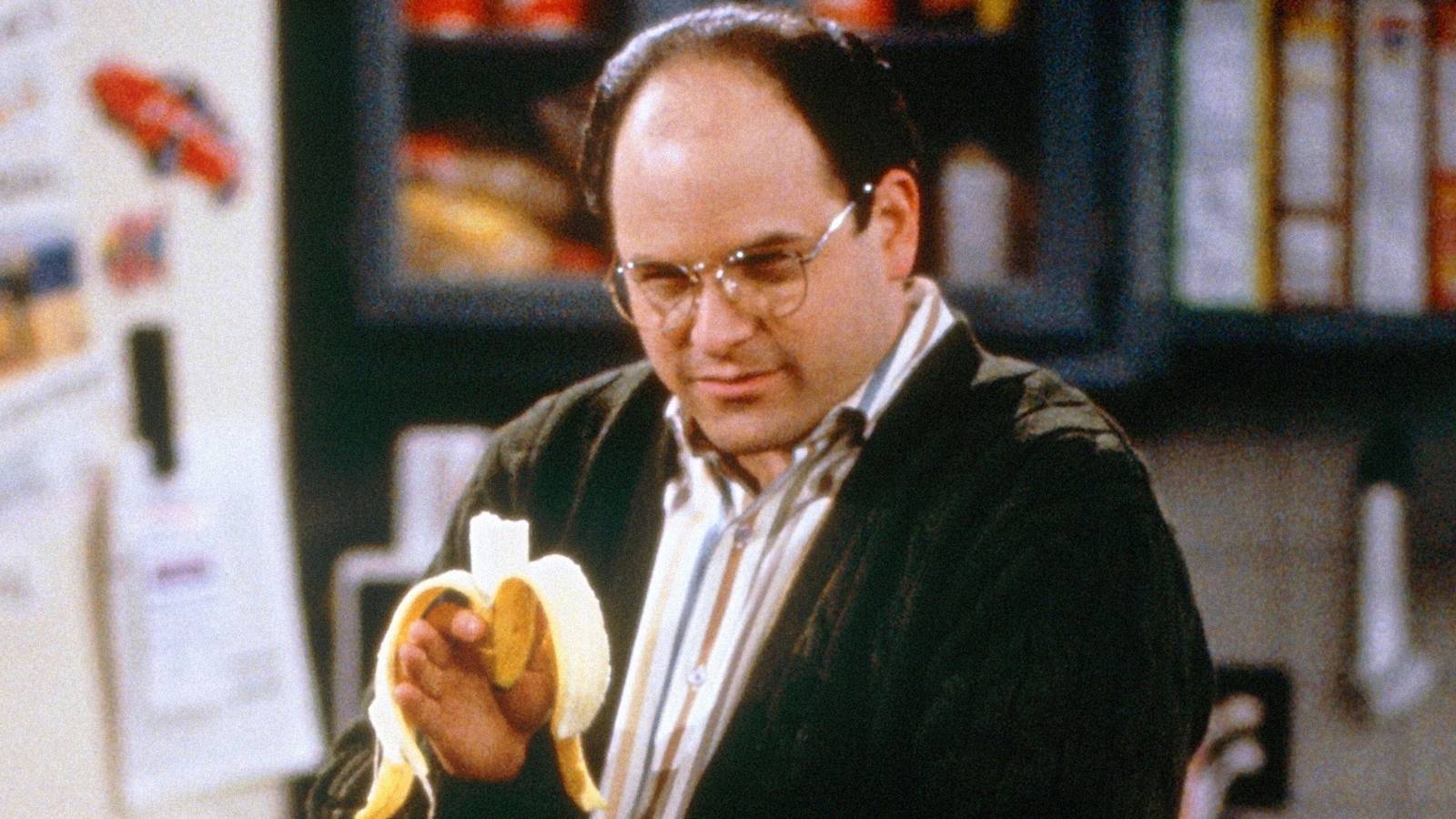
Published Sep 26, 2026, 2:30 PM EDT Ben Sherlock is a Tomatometer-approved film and TV critic who runs the massively underrated YouTube channel I Got Touched at the Cinema. Before working at Screen Rant, Ben wrote for Game Rant, Taste of Cinema, Comic Book Resources, and BabbleTop. He's also an indie filmmaker, a standup comedian, and an alumnus of the School of Rock. The history of American comedy is filled with iconic characters. We’ve seen hilarious characters on the big screen, like Ron Burgundy, and on the small screen, like Ron Swanson. We’ve seen hilarious characters brought to life on the stage, like Andy Kaufman’s lounge singer character Tony Clifton. Arguably, the best vehicle for a comedy character is the sitcom. Sitcom characters are in our homes every week, so we quickly become endeared to them, and they have plenty of time to make us laugh, but also to make us care about them. From Homer Simpson to Lucy Ricardo to George Costanza, these are the greatest comedy characters in the history of American television. 10 Leon Black Curb Your Enthusiasm There are two distinctive eras of Curb Your Enthusiasm: pre-Leon and post-Leon. J.B. Smoove turned out to be the missing ingredient to make the funniest cast on TV even funnier. His zany comic energy proved to be the perfect counterpoint to Larry David’s wry, cynical wit. Leon is the exact opposite of Larry: he’s younger yet wiser, he’s much more street-smart, and he’s a man of the people. Together, they’re a comedic pairing on par with Abbott and Costello or Laurel and Hardy. 9 Frank Drebin Police Squad! Frank Drebin went on to become one of the most iconic comedy movie characters, but he started off on television. The Naked Gun originated as a brilliant but short-lived spoof of cop shows called Police Squad! The show satirized case-of-the-week procedurals with the Zucker brothers’ usual absurdist humor. Everything that’s great about Leslie Nielsen’s performance in the movies originated on the TV show. No matter how ridiculous the situation, Nielsen plays it completely straight, with a completely straight face, and it somehow makes it even funnier. 8 Eric Cartman South Park South Park didn’t really take off until Trey Parker and Matt Stone figured out just how dark they could go with Cartman. Eric Cartman was conceived as an eight-year-old Archie Bunker — an ignorant bigot in elementary school — but after he fed Scott Tenorman his own parents, Cartman quickly devolved into the embodiment of pure evil. Cartman is a monster, doing horrible things to everyone around him and spewing disgusting hate speech, but since he’s a little boy with a favorite stuffed animal, he’s oddly lovable. South Park has hilariously juxtaposed Cartman’s inner maliciousness with his inherent childlike innocence. 7 Frasier Crane Cheers/Frasier Frasier Crane originated as the fusty academic foil for Ted Danson’s everyman Sam Malone on Cheers. But he really came into his own when he got a spinoff, and his own fusty foil: his brother Niles. Frasier is one of the few American sitcoms with the biting wit and sophistication of a classic British sitcom like Fawlty Towers or Only Fools and Horses. Kelsey Grammer gave a career-defining turn as Dr. Crane. Even in the reboot, when the writing was nowhere near as sharp, Grammer fully embodied this character. He’s always brought a real vulnerability and pathos to Frasier that makes us feel bad for him despite laughing at his many misfortunes. Frasier Release Date 1993 - 2004-00-00 6 Lucille Bluth Arrested Development Jessica Walter deserves credit just for making Lucille Bluth as lovable as she is. Lucille has no redeeming qualities — she’s a terrible mother, an elitist snob, and she’s completely out of touch with reality — and yet, when she gets excited about Gene Parmesan’s latest disguise or drolly declares that she doesn’t care for her eldest son, we can’t help but fall in love with her. Lucille always got the best one-liners in Arrested Development — certainly the most incisive — and Walter nailed the delivery of every single one. Just thinking about one of her best lines or facial expressions is enough to make you smile. 5 Michael Scott The Office Michael Scott started off as a 1:1 adaptation of his British counterpart, David Brent, but it wasn’t really working. David was perfect for a British audience that wanted to laugh at misfortune, but it didn’t work for an American audience that wanted to root for the underdog. When the writers started making Michael more sympathetic, and leaning into the innate warmth and lovability that Steve Carell was bringing to the role, he evolved into one of the greatest American comedy characters of all time. It’s the only time a British comedy character has been successfully adapted for an American audience. Can you imagine an American Alan Partridge working out this well? 4 Archie Bunker All In The Family Throughout the 1970s, Norman Lear reflected the political debates that were happening in American homes across the country in his hit sitcom All in the Family. The Bunkers’ living room became a microcosm of America itself, where staunch old conservatives were arguing with young, bleeding-heart progressives about abortion and women’s rights and the Vietnam War. Archie Bunker was the perfect avatar for every grumpy bigot glued to an armchair, and his son-in-law Mike Stivic was the perfect avatar for the liberals pushing back against his hate speech. All in the Family still holds up more than 50 years later, because we’re still having those arguments to this day. 3 Lucy Ricardo I Love Lucy Lucille Ball blazed the trail for women in comedy. The industry is still a boys’ club to this day, but in the 1950s, it was really a boys’ club, and Ball and Joan Rivers and Lily Tomlin all shattered the glass ceiling and clawed their way in. While Rivers and Tomlin brought their female energy to the standup stage, Ball brought it to the sitcom. I Love Lucy created the sitcom as we know it today, but it also proved that female comedians could be just as hilarious as their female counterparts. Usually, sitcoms have the wife rolling her eyes as the voice of reason during her husband’s wacky antics, but in I Love Lucy, Lucy is the wacky comic personality and her husband Ricky (played by Ball’s real-life husband Desi Arnaz) was the eye-rolling voice of reason. 2 George Costanza Seinfeld Before he created a sitcom that was literally about a fictionalized version of himself, Larry David put a fictionalized version of himself in the sitcom about a fictionalized Jerry Seinfeld. George Costanza exhibits all the traits that we now associate with Curb’s Larry character — pessimism, cheapness, poor social skills, lack of self-awareness, a tendency to say the wrong thing — but Jason Alexander brought a Shakespearean weight to every monologue and one-liner. Alexander didn’t start out as a comedian; he was a classical stage actor, so he approached Seinfeld like a dramatic play, and portrayed George as a real, flawed human being. Naturally, since the material was so strong and Alexander’s delivery was so committed, the laughs followed. Seinfeld 9/10 Release Date 1989 - 1998-00-00 1 Homer Simpson The Simpsons The greatest American comedy character ever created, the one who encapsulates everything that makes American comedy great, is Homer Simpson, and it’s not even close. On one level, Homer is a universally relatable archetype — a beer-swilling suburban husband and father with a blue-collar job, a dinged-up old car, and a mountain of debt — but, on another level, he’s just a blank slate for cartoon calamity. Yes, he’s often trying to win back his wife or do right by his kids or feel more fulfilled at work, but if the writers want to have him fall off a broken cliff like Wile E. Coyote or become a close colleague to a celebrity like Alec Baldwin or Mel Gibson, they can. The golden age of The Simpsons is the pinnacle of American comedy.
10 Greatest American Comedy Characters In TV History
Full Article
Original Source
Read the full article at Screenrant →KhanList aggregates and links to publicly available news content. We do not host full articles from third-party sources. Always verify important information with original sources.