
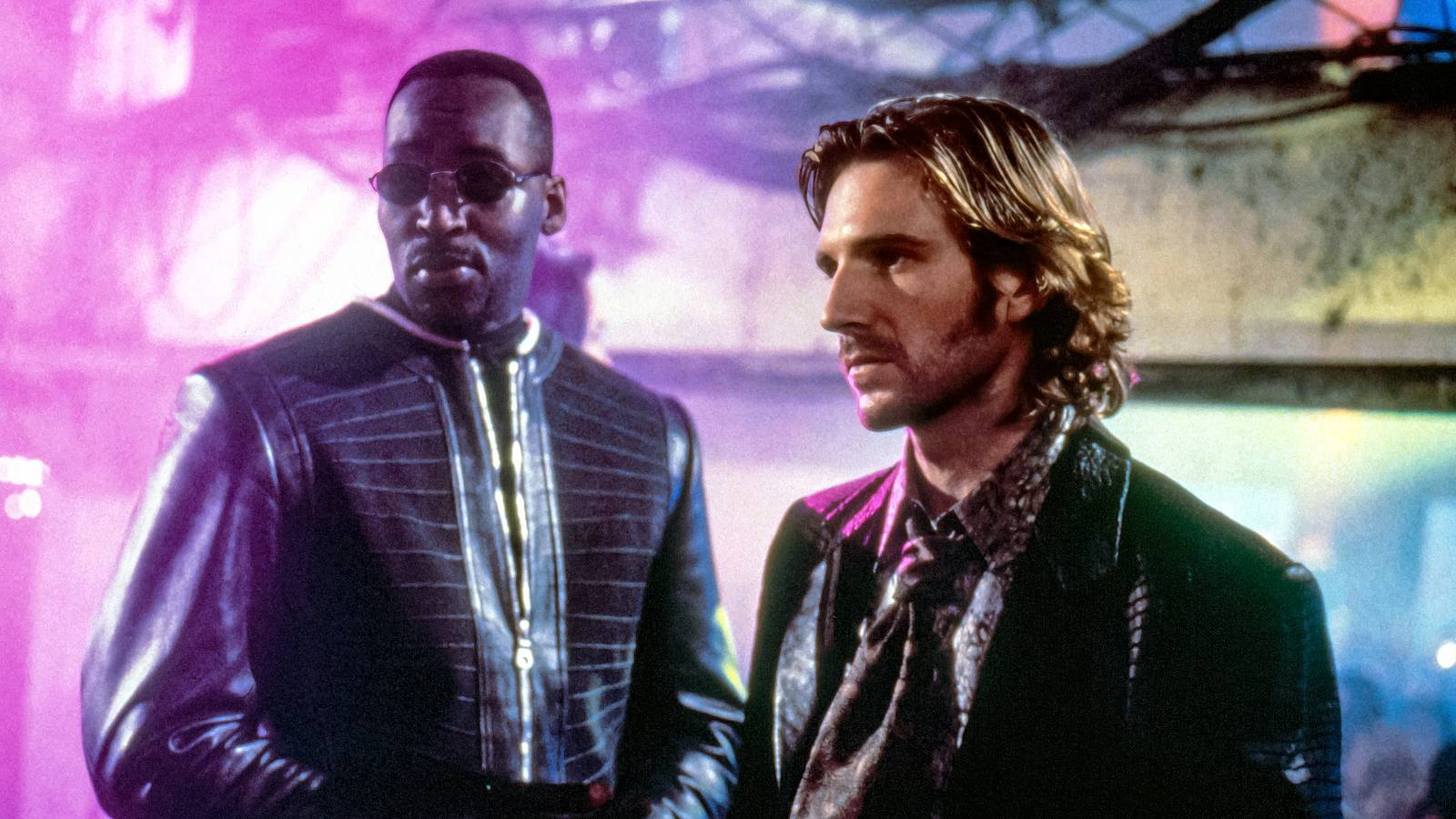
Image via Merie Wallace / TM and Copyright (c)20th Century Studios Published Sep 19, 2026, 12:36 PM EDT Ryan Heffernan is a Senior Writer at Collider. Storytelling has been one of his interests since an early age, with his appreciation for film and television becoming a particular interest of his during his teenage years. This passion saw Ryan graduate from the University of Canberra in 2020 with an Honours Degree in Film Production. In the years since, he has found freelance work as a videographer and editor in the Canberra region while also becoming entrenched in the city's film-making community. In addition to cinema and writing, Ryan's other major interest is sport, with him having a particular love for Australian Rules football, Formula 1, and cricket. He also has casual interests in reading, gaming, and history. Sign in to your Collider account It is a sad fact of cinema that there have been many great films over the decades that have been lost to time. It is also true that there have been plenty of movies that have delivered stories and themes that were years ahead of their time. Surprisingly, it is true that there exists an overlap between these two points: an abundance of engrossing and thought-provoking films that were forgotten decades ago and yet perfectly comment on issues and ideas of the modern day. Regardless of whether they’re exploring the complex line between cultural morality and technology, using absurdity to mock the growing divide between rich and poor, or simply covering issues of capitalism and the environment, these decades-old gems hold a striking relevance to today’s viewers. Ranging from ‘50s dramas to ‘90s sci-fi, from grueling tales of nuclear fallout to bleak satires of corporate life, all of these films stand as forgotten flicks that speak volumes in the year 2026. 'Silent Running' (1972) Image via Universal Pictures Released in the early 1970s, Silent Running was seen as an overly bleak sci-fi drama that lacked explosive spectacle. However, its thematic ideas were decades ahead of its time. Investing heavily in ideas of ecological preservation and the destructive brutality of corporate greed, it transpires aboard a space station where ecologist Freeman Lowell (Bruce Dern) tends to the few remaining samples of Earth’s fauna. When he is ordered to destroy his greenhouse to make room for cargo, he stands defiant against his employers. Silent Running’s messaging speaks directly to today’s cultural conversation around environmentalism, sustainability, and the impact of capitalism on the world. Even the presentation of its story feels distinctly modern. Director Douglas Trumbull employs a melancholic moodiness through Lowell’s loneliness that amplifies the central themes through the lens of individualism and isolation with quite a piercing emotional resonance. 'Bunker Palace Hotêl' (1989) Image via BAC Films A French post-apocalyptic satire, Bunker Palace Hotêl was met with critical division upon release in 1989 and made virtually no international impact, especially on Western audiences. Yet, its prescient commentary on modern America is eerily inescapable. It unfolds as social unrest erupts into civilization-destroying rebellion, leading the elites to take refuge in a luxurious underground bunker where they are tended to by android servants. When a rebel spy sneaks into the bunker, she observes the decadence of those in power as they grow anxious in waiting for their leader, who is yet to arrive. With a disdain for subtlety that feels incredibly modern, Bunker Palace Hotêl skewers the cultural disconnect between rich and poor, depicting the wealthy as a people of blissful ignorance blind to the collapsing world around them and the role they have played in it. The film’s brilliance is its timelessness. Viewers today can see it as a parable about the economic, societal, or climate crises in modern times, but its story of negligent leadership, class divides, and decaying social systems could unfortunately be applicable to any number of issues in the near future. 'Strange Days' (1995) Image via 20th Century Studios Standing as something of a hidden cult gem of ‘90s cinema, Strange Days presents a dystopian tale that many at the time thought was intriguing but far-fetched and forgettable. In 2026, however, many of its central ideas feel disconcertingly real. Set in a future where people’s experiences can be recorded and sold through a virtual reality-like device known as a SQUID, it follows a black marketeer of SQUID recordings as footage of a political activist’s murder embroils him in a violent web of police corruption and criminal conspiracy. With its emphasis on such topics as digital addiction, mass surveillance paranoia, voyeuristic exploitation, and systemic corruption, Strange Days has become eerily prophetic. Its cautionary tale mirrors the modern reality of the internet’s domination over our lives and the simmering unrest against law enforcement. While director Kathryn Bigelow drew heavily on the 1992 Los Angeles riots as a source of inspiration for this idea, her ability to predict a world where social media allows influencers to monetize experience is nothing short of ingenious. Strange Days is an ahead-of-its-time masterpiece that speaks directly to modern culture. 'Born in Flames' (1983) Image via First Run Features While it won praise from critics and arthouse audiences alike for the precision and conviction of its messaging, Born in Flames never found the foothold in mainstream awareness that it should have, ultimately becoming a forgotten gem of politically charged drama. In many respects, its prescience makes it even more relevant today than it was in 1983, especially through its exploration of tokenistic social reform, mass surveillance, and how systemic oppression persists even after political upheaval. Set in a future where a socialist government has gained power, it follows the experiences of several women as separate feminist groups mount a charge to stand defiant against the misogyny they face in the streets. Among its most palpable qualities to today’s viewers is how it depicts how inadequate government policies are at combating the root causes of social issues, the emphasis it places on the impact of targeted activism, and the way it shows how minority groups can still face marginalization, harassment, and unemployment even after major milestones in fighting against such issues. 'Seconds' (1966) Image via Paramount Pictures Combining psychological suspense and conspiracy thrills with aplomb, Seconds excels as a razor-sharp sci-fi heart-racer that pre-empted the modern day’s wave of workplace disillusionment, escapist fantasy, and the omnipresence of technology. It unfolds as a depressed banker breaks away from his seemingly happy life by undergoing a process that can change his appearance and implant him in a new life. Emerging as L.A.-based artist Tony Wilson (Rock Hudson), he soon discovers his idealized new life is far from what he expected. While a box office bomb that was soon forgotten by the masses, Seconds has become increasingly relevant, especially in recent years. In addition to its story of an identity crisis leading to a desperate break away from conformity, Seconds also touches on today’s obsession with self-modification, be it in the form of drastic cosmetic changes or lifestyle alterations, and the predatory nature of organizations that try to prey on people’s dreams of reinvention. Collider Exclusive · Sci-Fi Survival Quiz Which Sci-Fi World Would You Survive? The Matrix · Mad Max · Blade Runner · Dune · Star Wars Five universes. Five completely different ways the future went wrong — or sideways, or up in flames. Only one of them is the world your instincts were built for. Eight questions will figure out which dystopia, galaxy, or desert wasteland you'd actually make it out of alive. 💊The Matrix 🔥Mad Max 🌧️Blade Runner 🏜️Dune 🚀Star Wars TEST YOUR SURVIVAL → 01 You sense something is deeply wrong with the world around you. What do you do? The first instinct is often the truest one. APull on every thread until I understand the system — then figure out how to break it. BStop asking questions and start stockpiling — food, fuel, weapons. Questions don't keep you alive. CKeep my head down, observe carefully, and trust no one until I know who's pulling the strings. DStudy the patterns. Every system has a rhythm — learn it, and you learn how to survive it. EFind the people fighting back and join them. You can't fix a broken galaxy alone. NEXT QUESTION → 02 In a world of scarcity, what resource do you guard most fiercely? What we protect reveals what we believe survival actually requires. AKnowledge. If you understand the system, you don't need resources — you can generate them. BFuel. Everything else — movement, power, escape — runs on it. CTrust. In a world of fakes and informants, a truly reliable ally is rarer than any commodity. DWater. And after water, information — the two things empires are truly built on. EShips and credits. The galaxy is big — you survive it by being able to move through it freely. NEXT QUESTION → 03 What kind of threat keeps you up at night? Fear is useful data — if you're honest about what you're actually afraid of. AThat reality itself is a lie — that everything I experience has been constructed to keep me compliant. BA raid. No warning, no mercy — just the roar of engines and then nothing left. CBeing identified. Once someone with power decides you're a problem, you're already out of time. DBeing outmanoeuvred — losing a political game I didn't even know I was playing. EThe Empire tightening its grip until there's nowhere left to run. NEXT QUESTION → 04 How do you deal with authority you don't trust? Every dystopia has a power structure. Your approach to it determines everything. ASubvert it from the inside — learn its rules well enough to weaponise them against it. BIgnore it and stay out of its reach. The further from any power structure, the better. CAppear to comply while doing exactly what I need to do. Visibility is the enemy. DManoeuvre within it carefully. You can't beat a system you refuse to understand. EResist openly when I have to. Some things are worth the risk of being seen. NEXT QUESTION → 05 Which environment could you actually endure long-term? Survival isn't just tactical — it's physical, psychological, and very much about where you are. AUnderground bunkers and server rooms — cramped, artificial, but with access to everything that matters. BOpen wasteland — brutal sun, no shelter, constant movement. At least the threat is honest. CA dense, rain-soaked city where you can disappear into the crowd and nobody asks questions. DMerciless desert — extreme heat, no water, and something enormous living beneath the sand. EThe fringe — backwater planets and busy spaceports where the Empire's attention rarely reaches. NEXT QUESTION → 06 Who do you want in your corner when things fall apart? The company you keep is the clearest signal of who you actually are. AA tight crew of believers who've seen behind the curtain and have nothing left to lose. BOne or two people I'd trust with my life. Any more than that and someone talks. CNobody, ideally. Alliances are liabilities. I work alone unless I have no choice. DA community bound by shared hardship and mutual survival — people who need each other to last. EA ragtag team with wildly different skills and total commitment when it counts. NEXT QUESTION → 07 Where do you draw the line — if you draw one at all? Every survivor eventually faces a moment that tests what they're actually made of. AI won't harm the innocent — even the ones who'd report me without hesitation. BI do what I have to to protect the people I've chosen. Everything else is negotiable. CThe line shifts depending on who's asking and what's at stake. DI draw a long-term line — nothing that compromises my people's future, even if it'd help now. ESome lines, once crossed, can't be uncrossed. I know which ones they are. NEXT QUESTION → 08 What would actually make survival worth it? Staying alive is one thing. Having a reason to is another. AWaking others up — dismantling the illusion so no one else has to live inside it. BFinding somewhere — or someone — worth protecting. A reason to keep moving. CAnswers. Understanding what I am, what any of this means, before time runs out. DLegacy — shaping the future in a way that outlasts me by generations. EFreedom — for myself, for others, for every world still living under someone else's boot. REVEAL MY WORLD → Your Fate Has Been Calculated You'd Survive In…Your answers point to the world your instincts were built for. This is the universe your temperament, your survival instincts, and your particular brand of stubbornness were made for. The MatrixYou took the red pill a long time ago — probably before anyone offered it to you. You're a systems thinker who can't help but notice the seams in things. You're drawn to understanding how the system works before figuring out how to break it. You'd find the Resistance, or it would find you — your instinct for spotting constructed realities is the machines' worst nightmare. You function best when you have access to information and the freedom to act on it. The Matrix built an airtight prison. You'd be the one probing the walls for the door. Mad MaxThe wasteland doesn't reward the clever or the well-connected — it rewards those who are hard to kill and harder to break. That's you. You don't need comfort, community, or a cause larger than the next horizon. You need a vehicle, a clear threat, and enough fuel to outrun it — and you're good at all three. You are unsentimental enough to survive that world, and decent enough — just barely — to be something more than another raider. In the wasteland, that distinction is everything. Blade RunnerYou'd survive here because you know how to exist in moral grey areas without losing yourself completely. You read people accurately, keep your circle small, and ask the questions others prefer not to answer. In a city where humanity is a legal designation rather than a feeling, you hold onto something that keeps you functional. You're not a hero. But you're not lost, either. In Blade Runner's world, that distinction is everything. DuneArrakis is the most hostile environment in the known universe — and you are precisely the kind of person it rewards. Patience, discipline, and political awareness are your core strengths — and on Arrakis, they're survival tools. You understand that the long game matters more than any single victory. Others come to Dune and are consumed by it. You'd learn its logic and earn its respect. In time, you wouldn't just survive Arrakis — you'd begin to reshape it. Star WarsThe galaxy far, far away is vast, loud, and in a constant state of violent political upheaval — and you wouldn't have it any other way. You find meaning in being part of something larger than yourself — a cause, a crew, a rebellion. You'd gravitate toward the Rebellion, or the fringes, or whatever pocket of the galaxy still believes the Empire's grip can be broken. You fight — not because you have to, but because standing aside isn't something you're capable of. In Star Wars, that willingness is what makes all the difference. ↻ RETAKE THE QUIZ 'Death Watch' (1980) Image via Tamasa Distribution The premise of Death Watch was considered obscene when the film was released in 1980. In today’s world, however, several elements of it haven’t just become feasible; they’ve become completely normalized in Western culture. Set in a near-future where deaths caused by ailments have become rare, the last days of the terminally ill are broadcast on television. When Katherine (Romy Schneider) is diagnosed with an incurable disease, she strives to avoid publicity. She then befriends Roddy (Harvey Keitel), unaware that he has a chip implant that is recording everything he perceives. The dystopian fantasy it presented in 1980 is now a bleak reflection of technological progress, a brutal truth in today’s world of invasive reality TV that seeks to monetize personal tragedies while exploiting people’s lives for nothing more than cheap, inconsequential entertainment. Death Watch envisions a world of perpetual recording and live-streaming culture that has sadly become commonplace. Worse than that, the heinous, inhuman amorality it depicts has proven to be just as prophetic as well. 'Threads' (1984) Image via BBC It is difficult to say that Threads is even more appropriate now than it was upon release amid the height of Cold War tensions and social anxieties pertaining to nuclear war. However, it is eerie how the 1984 made-for-TV masterpiece has thundered back into relevance in recent years as geopolitical conflicts and renewed fears tied to nuclear weaponry have crept back into public consciousness. Director and producer Mick Jackson and screenwriter Barry Hines conducted extensive research into what the impact of a nuclear holocaust would be in order to deliver a haunting illustration of the fallout of nuclear war. It follows several residents of Sheffield whose lives are obliterated when the Soviet Union and America launch their bombs. Its documentary-style intensity and low-budget grit are especially piercing in today’s world of Hollywood sanitization, while its examination of the fragility of social structures imbues it with a visceral terror that speaks to the collapse of civilization in any form. All in all, a raw and unflinching cautionary tale of the destruction that awaits if nuclear war is to transpire. 'Sorcerer' (1977) Image via Paramount Pictures Lost within a decade that saw William Friedkin direct both The Exorcist and The French Connection, 1977’s Sorcerer is something of an underappreciated masterpiece from the director. Based on The Wages of Fear by Georges Arnaud, and filmed on location in the Dominican Republic, it follows four desperate, world-weary crooks who are offered $10,000 each and legal citizenship in exchange for transporting a highly unstable shipment of nitroglycerin through the jungle to a destination over 200 miles away. The film is a masterpiece of visceral, white-knuckle tension, soaring off the back of its painstaking practical filmmaking and probing sense of dread. It also strikes a chord with today’s world given how its narrative and characters commentate on issues of imperialism and corporate exploitation. By reducing its four leads to unvalued cogs sold a dream to embark on a suicidal mission, Sorcerer offers a scathing view of capitalist morality at its inhuman worst. The point will resonate with many today, especially with the corporate body in the film being an American oil conglomerate. 'Ace in the Hole' (1951) Image via Paramount Pictures Endowed with director and co-writer Billy Wilder’s storytelling nous and the star power of Kirk Douglas, Ace in the Hole feels like it should be one of the defining classics of Hollywood’s golden era. At the time of its release, however, it inspired critical derision as many viewed the story of a corrupt journalist’s exploitation of a local accident for self-gain to be a work of cynicism that sought only to question the integrity of the free press and democratic governance through malicious hyperbole. Needless to say, the world has changed exponentially in the 75 years since Ace in the Hole was released. The comical, immature excess it was originally viewed as presenting has become a pressing indictment of the modern era’s obsession with viral sensationalism, the unrelenting 24-hour media cycle, and the immoral circus of spin and spectacle that has emerged as news broadcasts have become a form of entertainment. Its satirical flamboyancy has become bitterly real, with perhaps the only point of fantasy now being the protagonist’s feelings of guilt and remorse when his manipulation of the story leads to tragedy. 'Brazil' (1985) Image via Universal Pictures After ending its theatrical run as a box office flop and regarded by many as an awkward mixture of retro-futuristic sci-fi aesthetic, absurdist comedy, and corporate satire, Brazil has become a cult gem in the years since. However, it delivers a barbed and eerily beautiful vision of bureaucratic dysfunction, hyper-surveillance paranoia, government apathy, and the war between conformity and individualism that viewers today would appreciate. Directed by the ever-eccentric Terry Gilliam, it follows low-level clerk Sam Lowry (Jonathan Price) as he inadvertently becomes an enemy of the state when he is dispatched to amend an administrative error and finds himself pursuing the love of his life. The boldness that hindered it in 1985 now gives it a vibrancy and identity that many movie lovers today crave. The social commentary on workplace monotony and government control has proven to be eerily prophetic. Brazil's final idea on escapism vs. reality is a perfect final touch that confronted many in the ‘80s but lands with somber maturity in 2026. Brazil Release Date December 18, 1985
10 Forgotten Movies That Are More Relevant Today
Full Article
Original Source
Read the full article at Collider →KhanList aggregates and links to publicly available news content. We do not host full articles from third-party sources. Always verify important information with original sources.