
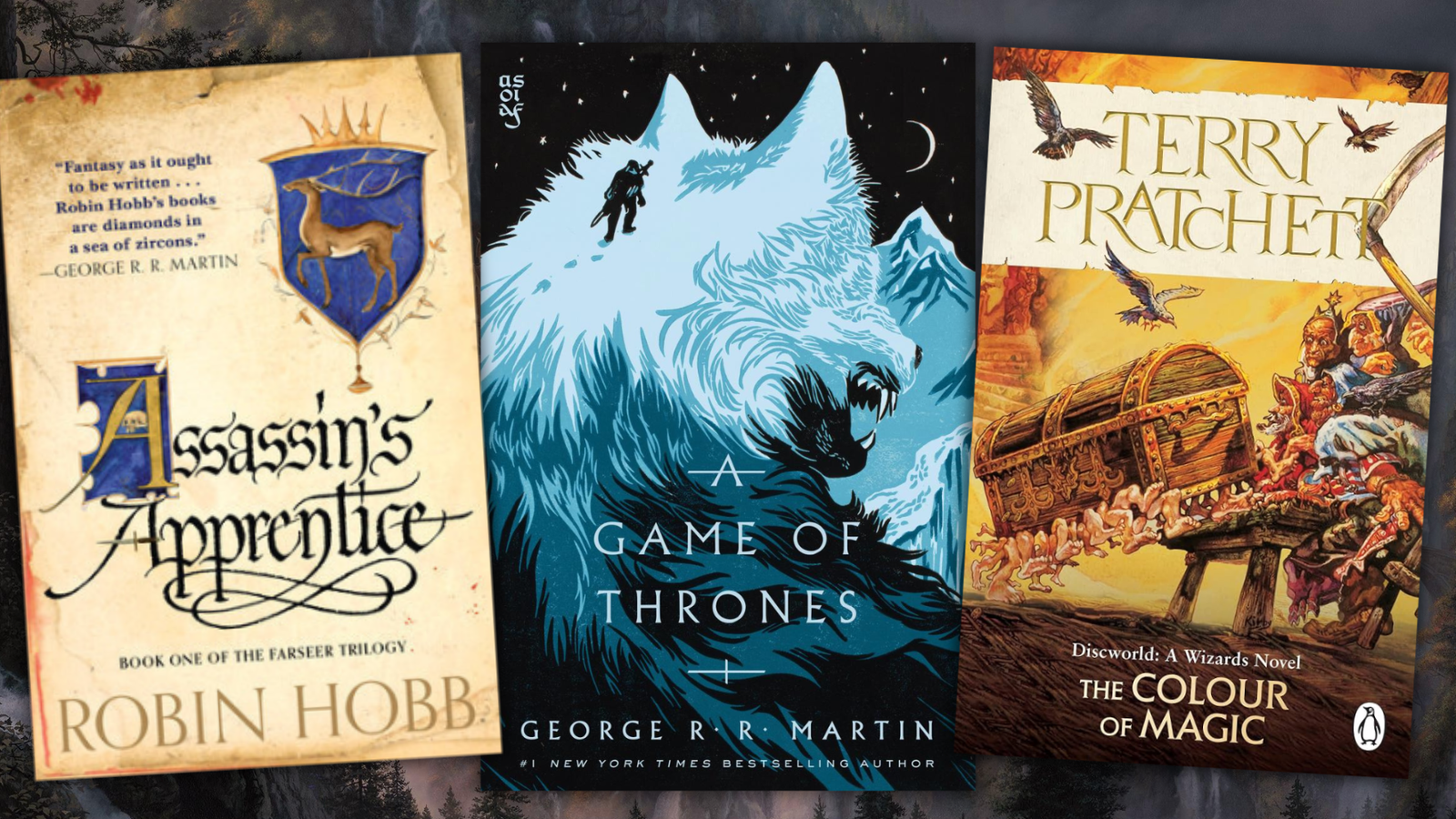
Published Aug 19, 2026, 5:00 PM EDT Hannah is a senior writer and self-publisher at ScreenRant. There, she focuses on writing news, features, and list-style articles about all things comics, books, anime, and manga. She works as a freelance writer in the entertainment industry, focusing on video games, anime, and literature. Her published works can be found on Screen Rant, FinanceBuzz, She Reads, and She Writes. Fantasy is a genre where one disappointing installment is sometimes enough to sour an otherwise beloved series. Fortunately, some authors have built remarkably consistent bodies of work, delivering books that remain compelling even when their stories, characters, and styles change dramatically. These ten fantasy series stand out for maintaining unusually high quality across their respective runs. That does not mean every reader will rank every installment equally. Personal taste inevitably plays a role, particularly with sprawling epics such as Malazan Book of the Fallen or The Stormlight Archive. Still, each series below has a strong argument for having no genuinely bad book, whether through ambitious storytelling, memorable characters, inventive worldbuilding, or consistently excellent prose. 10 Malazan Book of the Fallen by Steven Erikson Steven Erikson's Malazan Book of the Fallen is one of modern fantasy's most intimidating achievements. The main sequence consists of 10 novels, beginning with Gardens of the Moon in 1999 and ending with The Crippled God in 2011. Erikson steadily expands the story from military campaigns into an enormous examination of gods, empires, compassion, and mortality. The series' complexity sometimes makes individual books challenging, but that ambition is also its greatest strength. Deadhouse Gates, Memories of Ice, and Midnight Tides are particularly celebrated, while later books continue developing characters and conflicts established much earlier. Even the divisive installments contribute substantially to the overarching story rather than feeling disposable. 9 Discworld by Terry Pratchett Terry Pratchett's Discworld is almost the opposite of Malazan. Instead of one enormous continuous narrative, it contains 41 novels published between 1983 and 2015, connected by characters, locations, themes, and Pratchett's distinctive comedic voice. The series moves between subseries involving the City Watch, witches, Death, and characters such as Rincewind. Its consistency comes from Pratchett's ability to make fantasy satire genuinely entertaining in Discworld without sacrificing emotional substance. Guards! Guards!, Small Gods, The Truth, Going Postal, and Night Watch demonstrate different sides of the setting while remaining recognizably Discworld. Even the lighter books tend to contain sharp observations about politics, society, religion, or human behavior. 8 A Song of Ice and Fire by George R.R. Martin George R.R. Martin's A Song of Ice and Fire currently consists of five published novels, beginning with A Game of Thrones in 1996 and continuing through A Dance with Dragons in 2011. The planned series is six books, with The Winds of Winter still unreleased as of 2026. Its unfinished status remains one of its biggest frustrations. Nevertheless, the five existing novels maintain an extraordinary level of characterization and political intrigue. A Storm of Swords is frequently considered the series' peak, but A Feast for Crows and A Dance with Dragons deliberately broaden the narrative after major upheavals. Their slower pacing is purposeful, making them controversial rather than objectively poor. 7 His Dark Materials by Philip Pullman Philip Pullman's His Dark Materials is a trilogy comprising Northern Lights (published as The Golden Compass in the United States), The Subtle Knife, and The Amber Spyglass. The books follow Lyra Belacqua and Will Parry across multiple worlds while exploring free will, authority, consciousness, and the relationship between humanity and knowledge. Each installment has a distinct narrative identity without losing sight of the trilogy's larger purpose. Northern Lights/The Golden Compass establishes the alternate Oxford setting and dæmons, The Subtle Knife dramatically expands the multiverse, and The Amber Spyglass brings those threads together. Pullman's escalating ambition makes the trilogy feel cohesive rather than repetitive. 6 The Broken Earth trilogy by N.K. Jemisin N.K. Jemisin's Broken Earth trilogy consists of The Fifth Season, The Obelisk Gate, and The Stone Sky, published from 2015 to 2017. Set on a world repeatedly devastated by catastrophic geological events, the trilogy centers on orogenes, people capable of manipulating seismic energy but subjected to widespread fear and oppression. The sci-fi trilogy became especially notable for its structural experimentation and thematic depth. The Fifth Season won the Hugo Award for Best Novel in 2016, followed by The Obelisk Gate in 2017 and The Stone Sky in 2018. That made Jemisin the first author to win three consecutive Hugos for the same trilogy. 5 Earthsea Cycle by Ursula K. Le Guin Ursula K. Le Guin's Earthsea books began with A Wizard of Earthsea in 1968 and eventually expanded to six novels: A Wizard of Earthsea, The Tombs of Atuan, The Farthest Shore, Tehanu, Tales from Earthsea, and The Other Wind. The series follows characters such as Ged while gradually changing its perspective on magic and power. What makes Earthsea remarkable is how dramatically its themes mature. The early books possess the atmosphere of classic coming-of-age fantasy, while Tehanu revisits the world from a more grounded and socially critical perspective. Le Guin never simply repeats her original formula, giving the later books their own purpose and identity. 4 The Green Bone Saga by Fonda Lee Fonda Lee's Green Bone Saga is a completed trilogy consisting of Jade City, Jade War, and Jade Legacy. Beginning in 2017, the series follows the Kaul family and the No Peak clan as they navigate organized crime, political struggles, international tensions, and the supernatural power provided by magical jade. The trilogy's strength lies heavily in its character development. Jade City establishes the Kauls and their volatile family dynamics, Jade War expands the conflict beyond Kekon, and Jade Legacy delivers the consequences of those escalating struggles. Rather than stretching its premise indefinitely, Lee gives the saga a deliberately structured beginning, middle, and ending. 3 The Stormlight Archive by Brandon Sanderson Brandon Sanderson's The Stormlight Archive is planned as a 10-book sequence divided into two five-book arcs. The first five novels are The Way of Kings, Words of Radiance, Oathbringer, Rhythm of War, and Wind and Truth. The fifth volume, Wind and Truth, was published in December 2024 and concludes the series' first major arc. The books combine enormous battles and intricate magic with extensive character-focused storytelling. Words of Radiance and The Way of Kings are especially important foundations, while Rhythm of War explores the science behind Roshar's magical systems more deeply. Even when pacing slows, Sanderson continues adding meaningful information about the world and its characters. 2 The Realm of the Elderlings by Robin Hobb Robin Hobb's Realm of the Elderlings is a 16-book universe divided into five connected series: the Farseer Trilogy, Liveship Traders Trilogy, Tawny Man Trilogy, Rain Wilds Chronicles, and Fitz and the Fool Trilogy. The books span generations and multiple regions, but FitzChivalry Farseer remains the main character across several major arcs. Hobb's greatest strength is her willingness to let consequences linger. Events from Assassin's Apprentice reverberate through later books, while characters introduced in the Liveship Traders eventually connect to the wider story. The series is often emotionally demanding, but its careful character work gives even its quieter installments substantial narrative weight. 1 The Lord of the Rings trilogy by J.R.R. Tolkien J.R.R. Tolkien's The Lord of the Rings consists of The Fellowship of the Ring, The Two Towers, and The Return of the King. Although the work was published in three volumes, Tolkien conceived it as a single novel, following Frodo Baggins and the Fellowship as the War of the Ring transforms Middle-earth. The trilogy remains remarkably cohesive because Tolkien balances epic history with intimate character moments. The Fellowship of the Ring establishes the journey and lore, The Two Towers dramatically fractures the narrative into multiple fronts, and The Return of the King resolves the main conflict while exploring the cost of victory. Few fantasy trilogies or book series' have matched that structure.
10 Fantasy Series Without A Single Bad Book
Full Article
Original Source
Read the full article at Screenrant →KhanList aggregates and links to publicly available news content. We do not host full articles from third-party sources. Always verify important information with original sources.