
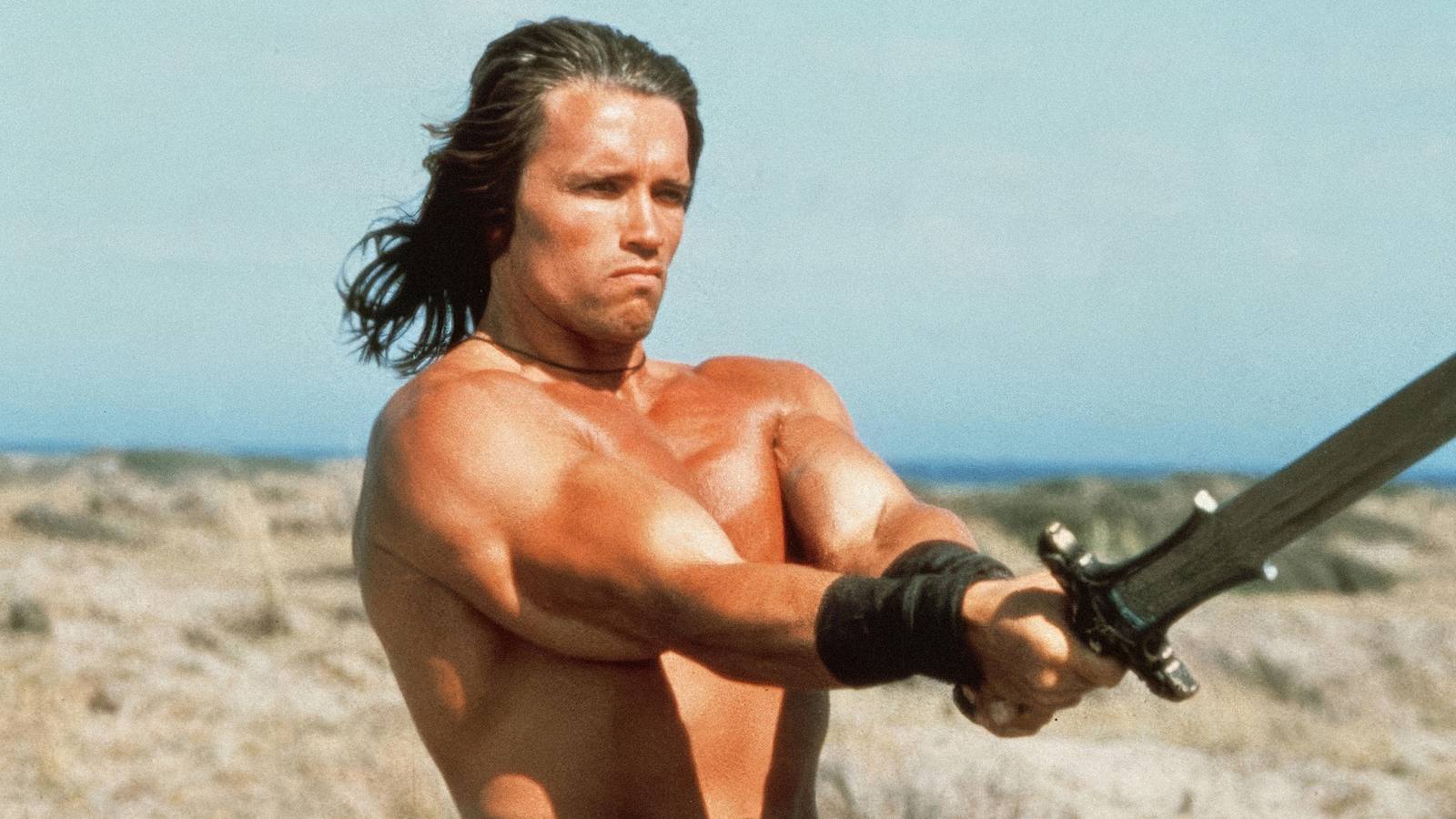
Image via Universal Pictures Published Oct 8, 2026, 7:04 AM EDT Born with Autism (formerly classified as Asperger syndrome), Tyler B. Searle has been obsessed with storytelling since he was old enough to speak. He gravitated towards fairy tales, mythology, the fantasy genre, and animated movies and shows aimed at family audiences. When not writing, Tyler enjoys watching more cartoons and reading fantasy books in his home in Ontario, Canada. Sign in to your Collider account Fantasy is probably the oldest genre of storytelling. It has long allowed humans to make sense of the world around them by presenting relatable fears, virtues, and aspirations as horrific monsters, ancient curses, and brave heroes. When cinema began to emerge at the turn of the 19th century, fantasy movies were some of the earliest, and the years have only seen them get better thanks to improved effects and more creative writers. Some fantasy films are more noteworthy than others thanks to how they shook up the genre. Be it through amazing effects, trend-setting writing choices, or iconic character archetypes, these fantasy movies set a standard that few others have been able to match, let alone surpass. Within the beloved genre, there is a clear before and after these movies, cementing their legacies as bona fide pioneers. 'Shrek' (2001) Image via DreamWorks Animation When Lord Farquaad (John Lithgow) orders all fairy tale creatures banished from his lands, they are relocated to a swamp inhabited by an antisocial ogre named Shrek (Mike Myers). With the aid of a talking donkey (Eddie Murphy), Shrek meets Lord Farquaad, who agrees to remove the squatters if Shrek will recover his would-be bride, Princess Fiona (Cameron Diaz), from a dragon-guarded castle. However, there is more to Fiona than meets the eye, and she and Shrek quickly begin to bond. Shrek is one of the seminal films of the 21st century: it established that 3D was the new way to make animated films, and cemented DreamWorks as a legitimate contender against the likes of Disney and Pixar. The writing was also very influential thanks to its raunchy and satirical take on classic fairy tale tropes that had been popularized by Disney in the 1990s. Finally, the film just has a great, timeless feel to it, with a universal message about acceptance and the dangers of judging too quickly. 'Spirited Away' (2001) Image via Toho While moving to a new house, Chihiro (Rumi Hiiragi/Daveigh Chase) becomes trapped in the spirit world with her parents, who are transformed into pigs for eating spirit food. She is helped by a young man named Haku (Miyu Irino/Jason Marsden), who helps her get a job at the local bathhouse. There, the witch Yubaba (Mari Natsuki/Suzanne Pleshette) takes Chihiro's name as part of the contract and renames her Sen. However, the job provides Chihiro with a level of security, allowing her to come up with a plan to rescue her parents and escape. Spirited Away was the first foreign film to win the Academy Award for Best Animated Feature and influenced many creatives who viewed it, thanks to its gorgeous atmosphere. There are plenty of quiet moments that let the emotional weight of the scene resonate with the viewer, and a creative spirit world with its own confusing yet internally consistent rules. Then there is the animation, which is some of the most detailed and fluid ever seen in a 2D film, leading to creative creature designs, expressive facial and body movements, and so much detail that you need to watch the film several times to catch it all. 'The Dark Crystal' (1982) Image via Universal Pictures On the planet Thra, there live two ancient races: the avian Skeksis, who drain the planet's life force through the damaged Crystal of Truth, and the mystical urRu, who live in secret and shelter one of the last Gelflings, named Jed (Stephen Garlick). One day, both the Skeksis Emperor and the leader of the urRu die, so Jed is sent on a quest to recover the missing shard of the Crystal of Truth to stop the Skeksis from completely draining the planet during the Great Conjunction. He finds allies in Mother Aughra (Billie Whitelaw), the ancient but eccentric wise woman of Thra, and Kira (Lisa Maxwell), a female Gelfling who survived the Skeksis' genocide against their people. The Dark Crystal is a masterpiece by Jim Henson, creator of The Muppets. Thus, it's no surprise that the puppetry in the film is revolutionary, with every creature and plant looking, moving, and feeling like something truly alien. The Skeksis are the best of these fascinating creations, with incredibly expressive faces that help to complement their wicked personalities. 'Conan the Barbarian' (1982) Image via Universal Pictures When raiders led by Thulsa Doom (James Earl Jones)wipe out his village and kill his parents, Conan (Arnold Schwarzenegger) is sold into slavery and turned into a prized gladiator. He eventually earns his freedom and joins two companions—an archer named Subotai (Gerry Lopez) and a warrior named Valeria (Sandahl Bergman)—with whom he teams up to rob a snake temple. As it turns out, this temple is operated by Thulsa Doom, which sets Conan down the path of vengeance. Conan the Barbarian kicked off the golden era of 1980s fantasy films thanks to its high production value and epic scale. Between its iconic music, gritty action sequences, and fantastic performances from the cast, it transported audiences into a world of ancient mythology where magic is a terrifying force, and people must rely both on brute force and cunning to survive. It also began Schwarzenegger's career as an action star, leading to future roles in The Terminator and The Predator, among so many others. 'The Lost World' (1925) Image via First National Pictures Paula White (Bessie Love) approaches eccentric Professor Challenger (Wallace Beery) with her father's journal, which details a plateau in South America where dinosaurs may still walk the Earth. Challenger funds an expedition to the plateau to rescue Paula's father, bringing with him big game hunter Sir John Roxton (Lewis Stone), reporter Edward Malone (Lloyd Hughes), and Professor Summerlee (Arthur Hoyt), among others. What they find is a hostile landscape where prehistoric animals constantly battle one another for survival, while they are stalked by a mysterious ape-man (Bull Montana). The Lost World is a pioneering silent film that set the framework for the "lost world" trope, where modern civilization clashes with remnants of a bygone era. The stop-motion effects by Willis O'Brien were also revolutionary, bringing the prehistoric creatures to life in a way never seen before. O'Brien would expand on this foundation eight years later for King Kong, and future stop-motion legends like Ray Harryhausen and Phil Tippett would be inspired by his work. Collider Exclusive · 8 Questions · 2 Minutes What Fantasy World Do You Belong To? Middle-earth · Grand Line · The Continent · Camp Half-Blood Pick your magic, your crew, where you want to wake up and who you would rather be fighting, and we will tell you which world you actually belong in. Four are open to you: an ancient kingdom living through its last good age, an endless sea full of pirates, a continent that pays people to kill monsters, and a summer camp where the Greek gods are extremely real and mostly a nuisance. 💍Middle-earth(Rings of Power) 👒Grand Line(One Piece) 🐺The Continent(The Witcher) 🔱Camp Half-Blood(Percy Jackson) FIND YOUR WORLD → 01 What kind of power do you want? Every one of these worlds runs on a completely different sort of magic. ASomething ancient and half forgotten that came down through my family. BSomething completely ridiculous that works in a fight and gets a laugh. CNo magic at all, just training, potions and a very sharp sword. DSomething I inherited from a parent I have barely met. NEXT QUESTION → 02 Who is travelling with you? Nobody gets through any of these stories entirely on their own. AA fellowship drawn from every corner of the world who barely trust each other. BA crew I picked up one at a time, all of whom would die for me. CTwo or three people I would never describe out loud as friends. DTwo mates from school who are exactly as out of their depth as I am. NEXT QUESTION → 03 Where do you want to wake up tomorrow? The best fantasy is usually just somewhere you would genuinely like to live. AA high city of white stone with the sea somewhere far below. BA ship under sail, with an island ahead that nobody has mapped. CA rented room over a tavern, in a town I am leaving in the morning. DA cabin at a summer camp with everybody else already awake outside. NEXT QUESTION → 04 How are you making a living out there? Even in fantasy somebody has to pay for the horse. AI am not, because somebody far older than me decided this was my duty. BTreasure, and I am not always careful about whose it used to be. CI take contracts, since people will pay well for what they will not touch. DI am fifteen and this is all technically a school trip. NEXT QUESTION → 05 There is something in the woods. What do you do about it? All four of these worlds keep something unpleasant out there in the dark. ASend word to somebody who has seen this before, then hold the line. BWalk straight in, because it is interesting and possibly edible. CAsk what it has been eating and what the village is willing to pay. DWork out which myth it escaped from, then improvise very badly. NEXT QUESTION → 06 Who is the villain of your story? The enemy tells you far more about a world than the hero ever does. AAn ancient evil that has been patient for several thousand years. BA government that has spent a long time calling itself the good guys. CA man who turns out to be far worse than anything I hunt for money. DA god, or possibly my own family, and quite likely both at once. NEXT QUESTION → 07 What do you actually believe in out there? Every world hands its heroes one rule and asks them to hold onto it. ASome things are worth defending even when the odds are hopeless. BNobody gets to tell me where I can go or what I am allowed to want. CPick the lesser evil, and never pretend afterwards that it was not evil. DMy friends come before anything a prophecy has to say about it. NEXT QUESTION → 08 A thousand years from now, how are you remembered? Eight questions in, this is the one that decides your world. AIn a song, in a language hardly anybody still speaks. BAs the one who got there first and proved the whole thing was possible. CBarely, and mostly wrongly, in ballads I would absolutely hate. DOn a plaque at a camp, read by kids about to do the same thing. REVEAL MY WORLD → The Map Is Drawn Your World Is…Four worlds and four completely different ideas of what a good life looks like. This is where you belong, what it would ask of you, and what you would get back in return. Middle-earthYou belong somewhere old enough that the mountains have names and somebody can still tell you who gave them. Middle-earth is for people who think the right thing is worth doing even when it will not be finished in their lifetime. This is the only world on the list where doing good is understood as a very long defeat, fought anyway, by people who will never see how it ends. You are drawn to grandeur, to white cities and deep forges and the sense that almost everything you touch is older than your entire family line. The Rings of Power is set in the last good age before it all goes wrong, which gives every quiet scene in it a slightly unbearable weight. You would take the hard road, and you would take it on foot. The Grand LineYou want the sea, a crew, and absolutely nobody telling you where you are allowed to go. The Grand Line is the world for people whose main ambition in life is finding out what is over there. One Piece has run for decades on one very simple engine, which is a group of people who each want something impossible and have decided to go and get it together. You collect people. Your ideal crew is a set of misfits who were each written off somewhere else before you turned up and offered them a better idea. The world is enormous and deliberately ridiculous, and the emotional gut punches land harder because of that rather than in spite of it. You would set sail knowing the map runs out, which is more or less the entire point of it. The ContinentYou would rather be feared and useful than liked and useless. The Continent is a world where the monsters are the straightforward part of the job and the people are where it all gets complicated. Witchers get paid to do what nobody else will and resented for existing at all, which is a trade most people would refuse and you would probably accept. You have no real illusions about which side is the good one, largely because on the Continent that question tends to have a disappointing answer. The best of these stories are not about the fighting. They are about somebody with a rigid code being repeatedly cornered into caring about people. You would take the coin, finish the job properly, and be out of town before the story got told wrong. Camp Half-BloodYou want the myths to be real and loose in the actual world, and you want to find out at about thirteen that you were never anywhere near as ordinary as everybody kept telling you. Percy Jackson takes the oldest stories we have and drops them into car parks and diners, which makes the gods considerably funnier and a great deal worse. You would be the kid every school gave up on, who turns out to have been built for something nobody thought to test for. The series is genuinely about friendship rather than destiny, and it says so out loud every time a prophecy tries to get in the way. Camp Half-Blood is the real fantasy here: a place where the thing that made you difficult everywhere else is the thing that makes you belong. ↻ RETAKE THE QUIZ 'The Thief of Bagdad' (1940) Image via United Artists A blind beggar in Basra reveals to a crowd of listeners that he is Ahmad (John Justin), the king of Baghdad, who was recently deposed by his evil grand vizier, Jaffar (Conrad Veidt). He escapes execution with the help of a thief named Abu (Sabu), and the two flee to Basra, where Ahmad falls in love with its princess (June Duprez). However, Jaffar also lusts after her, and he is prepared to use his excessive knowledge of black magic if anyone gets in his way. The Thief of Bagdad is a remake of the 1924 silent film of the same name. However, it's arguably the more influential version thanks to its pioneering use of blue screen technology, which gives the magical moments and creatures a feel of slight otherworldliness that cements them as unnatural when set against gorgeous sets and on-site locations. Its aesthetic can also be felt in every subsequent adaptation of the One Thousand and One Nights, but can most obviously be seen in films like Aladdin. 'The Adventures of Prince Achmed' (1926) Image via University Arts Foundation A wicked sorcerer approaches the local Caliph and offers a magical flying horse in exchange for his daughter's hand in marriage. The Caliph's son, Prince Achmed, objects to the proposal, so the sorcerer offers to let him sample the horse first. Unfortunately, Achmed isn't able to get the horse to descend until he is lost in the land of Wak Wak, and must find his way home while facing horrible demons and other dark forces. The Adventures of Prince Achmed is the oldest surviving animated film and was a pioneer in many areas. It was among the first uses of the multiplane camera, which was crucial in creating the film's unique shadow-puppet aesthetic. It's also one of the earliest films that adapt the One Thousand and One Nights, even if it's combining elements from numerous stories to create a single, new narrative. 'Snow White and the Seven Dwarfs' (1937) Image via Walt Disney Studios Motion Pictures When the Evil Queen (Lucille La Verne) learns that her stepdaughter, Snow White (Adriana Caselotti), is considered fairer than her, she tasks her huntsman (Stuart Buchanan) with killing the princess. He can't bring himself to do it and instead warns Snow White to flee into the forest. There, she makes friends with the wildlife and eventually meets seven dwarfs, who agree to let her stay with them in their cottage. Snow White and the Seven Dwarfs was not only the first animated film in the Disney canon, but also North America's first animated film, and the first made in three-strip Technicolor. Nobody thought that it would succeed at first, but it broke all expectations thanks to its beautiful animation and simple but emotionally gripping story and characters. It showed that audiences were not only hungry for animated films, but fairy tales in general. 'The Lord of the Rings' Trilogy (2001-2003) Frodo Baggins (Elijah Wood) is a young hobbit from the Shire who learns that the golden magic ring he inherited from his uncle, Bilbo (Sir Ian Holm), is actually the One Ring: an artifact forged by the dark lord, Sauron (Alan Howard), and imbued with a piece of his soul. At the instruction of the wizard Gandalf (Sir Ian McKellen), he travels to the elven city of Rivendell with trusted companions, where it is decided that the Ring must be destroyed before Sauron can reclaim it. As Frodo begins the perilous journey to the volcano Mount Doom, Sauron gathers his army and wages his final war on the free people of Middle-earth. Sir Peter Jackson's The Lord of the Rings trilogy broke new ground by proving that fantasy movies could be major blockbusters. The third film, The Return of the King, even won all eleven Oscars it was nominated for, including Best Picture. Groundbreaking special effects and the beautiful New Zealand landscape brought Middle-earth and its people to life so vividly that it feels like an actual, tangible location, with plenty of history and rich cultures to explore beyond what the movies show. The trilogy kicked off a huge wave of fantasy movies in the 2000s, including adaptations of The Chronicles of Narnia. 'The Wizard of Oz' (1939) Image via Warner Bros. When a tornado sweeps up her farmhouse, Dorothy Gale (Judy Garland) and her dog Toto (Terry) find themselves transported to the magical land of Oz, where her house killed the Wicked Witch of the East. Glinda (Billie Burke), the Good Witch of the North, gives Dorothy the deceased witch's ruby slippers and tells her to travel to the Emerald City to ask the Wizard of Oz (Frank Morgan) to get her home. She makes friends with a brainless Scarecrow (Ray Bolger), a heartless Tin Man (Jack Haley), and a Cowardly Lion (Bert Lahr), but also an enemy in the deceased witch's sister, the Wicked Witch of the West (Margaret Hamilton). The Wizard of Oz is a landmark film in cinema history thanks to its iconic use of three-strip Technicolor to show the difference between Oz and the real world. Beyond that, it cemented the fairy-tale film style thanks to its easy-to-follow story, iconic characters, catchy songs, and great sense of whimsy and fun. It proved that fantasy films could be enjoyed by all audiences, thus paving the way for everything that followed. The Wizard of Oz Release Date August 25, 1939 Cast Judy Garland, Ray Bolger, Jack Haley, Bert Lahr, Frank Morgan, Margaret Hamilton, Billie Burke, Charley Grapewin, Pat Walshe, Clara Blandick, Terry, Adriana Caselotti, Harry Earles, Jerry Maren, Buddy Ebsen, Parnell St. Aubin, Billy Bletcher, Pinto Colvig, Charles Becker, Mitchell Lewis, Buster Brodie, Ethelreda Leopold, Billy Curtis, Eleanor Keaton, Angelo Rossitto Runtime 102 minutes Director Victor Fleming Writers Edgar Allan Woolf, Florence Ryerson, Noel Langley, L. Frank Baum
10 Fantasy Movies That Changed the Genre Forever
Full Article
Original Source
Read the full article at Collider →KhanList aggregates and links to publicly available news content. We do not host full articles from third-party sources. Always verify important information with original sources.