
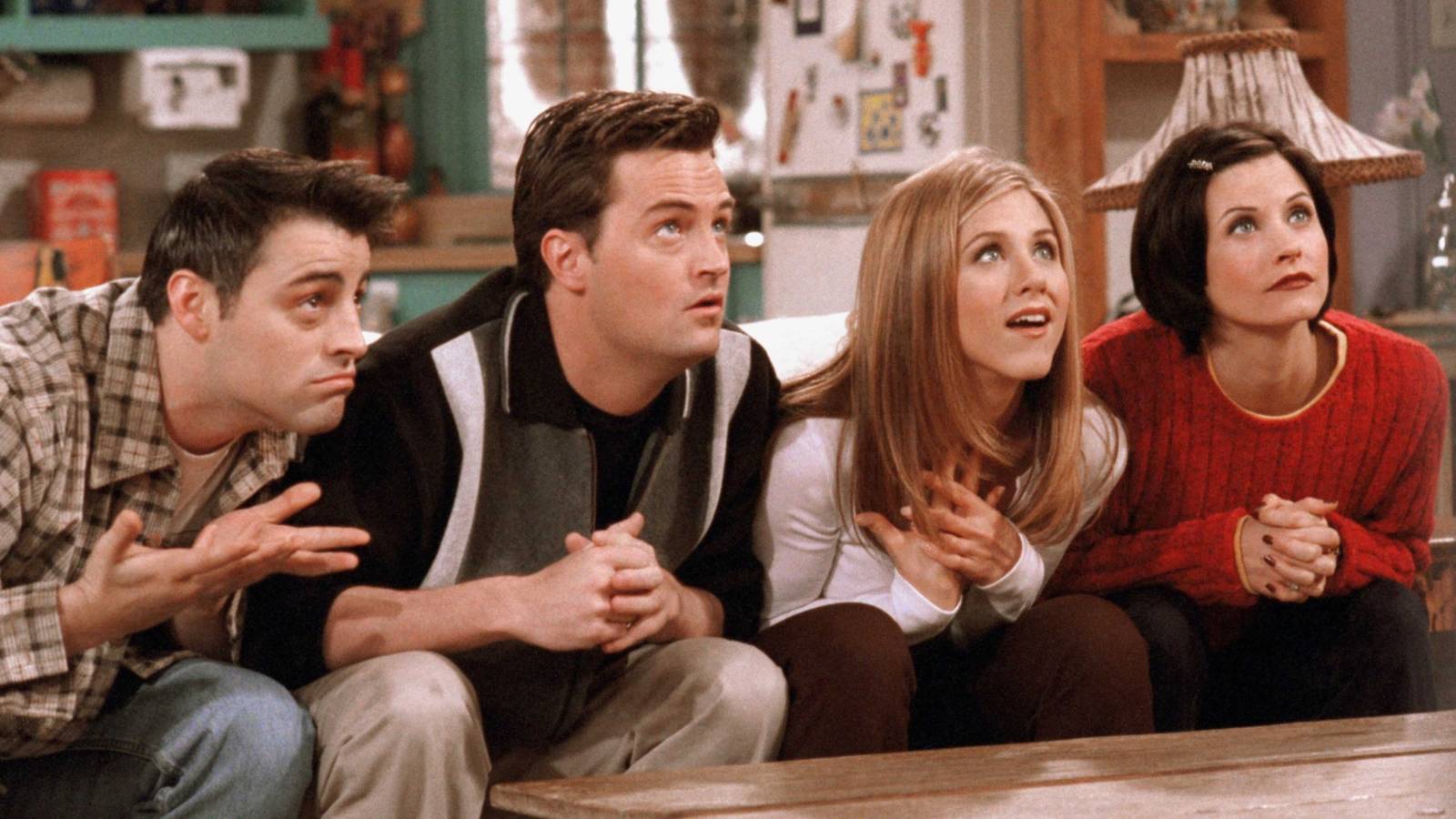
Published Sep 6, 2026, 11:59 PM EDT Laura Hurley has been writing about the entertainment industry for more than twelve years, after a decade as a content producer and editor at CinemaBlend after writing for WhatCulture and Examiner. Attending events like SCAD TVfest and San Diego Comic-Con over the course of her career, she has been immersed in the world of network, streaming, and cable TV. Some of the most iconic TV shows of all time earned their legendary status thanks to their plots, premises, and even the chemistry between cast members, but the titles shouldn't be overlooked either. Some series, like Cheers, took a common word and turned it into the name of a widely-known sitcom. That '70s Show went from the name of an era to the title of one of the most popular sitcoms of the early 2000s. Lost gained a whole new meaning as a word after the ABC drama of the same name debuted in 2004, despite the controversial finale. Some shows don't land on their iconic names from the very beginning, however, and it can take some time before they're branded in the way that fans remember them to this day. Popular projects going all the way back to the '60s have been renamed over the years, ranging from shows that changed their names after already airing several seasons to series that weren't changed until after a pilot episode was produced. While the name of a show doesn't deserve the sole credit more giving it staying power in pop culture, the rebranding likely helped some of these shows become pop culture icons rather than fading into obscurity over the years. A catchy title can grab audiences during pivotal stages of development, and sometimes finding it just takes a little extra time. Seinfeld (1989-1998) MovieStillsDB Despite Seinfeld's status as a "show about nothing," Jerry Seinfeld and Larry David found something that connected with audiences on NBC in the early '90s. The sitcom needed some time to finalize what would ultimately work in the long run, including the decision to replace the original female lead with Julia Louis-Dreyfus. Back in the earliest days of developing the comedy, it also even had a different title: The Seinfeld Chronicles. It was ultimately cut down to just Seinfeld, although "The Seinfeld Chronicles" was the name of the pilot episode that aired on NBC and earned a full order for the first season. Rather than continuing with a title that was a little too similar to ABC's The Marshall Chronicles, NBC tweaked the name of its new sitcom. Ironically, The Marshall Chronicles lasted for just one season, made up on seven episodes. Seinfeld would run for nine seasons, and nearly 200 episodes. NCIS - Navy NCIS MovieStillsDB NCIS is currently a powerhouse of a primetime drama, to the point that it has spawned seven spinoffs. The complete CBS fall 2026 schedule has a night devoted to the NCIS franchise, and the original series will premiere its 24th season in October. Back in 2003 when CBS was mostly promoting it as a spinoff of JAG rather than a solo show, the drama had a very different and much more redundant name: Navy NCIS. While creator Don Bellisario wanted the title to just be NCIS, CBS went in a different direction that prevented the new drama from joining JAG and CSI as shows known for their acronyms. In 2014, Bellisario reflected on that decision made by then-CBS Corporation CEO Les Moonves. He told the Television Academy Foundation: You tie it to JAG, and the young people are gonna go, 'It's just another version of JAG. And they're not gonna watch it. So don't do that. Please don't do that.' Man, not only did he tie it in, he used the name Navy NCIS. Navy Naval Criminal Investigative Service. It was ridiculous. And it was a mistake. The show would be billed as Navy NCIS for its first season, which aired from 2003-2004. Ever since, the original show and every spinoff has just included the acronym rather than adding "Navy." Saved By The Bell Image via MovieStillsDB Saved by the Bell is remembered as one of the most beloved teen comedies of the early '90s, and the core cast of kids was so popular that their stories expanded into movies, spinoffs, and even a revival for Peacock in 2020. Few may remember that the sitcom was once entirely different, down to the title: Good Morning, Miss Bliss. The premise of the show focused on Miss Bliss, played by Hailey Mills, a sixth grade teacher at a school in Indianapolis. The original home was on the Disney Channel, where it was retooled to shift the focus away from the teacher and shine the spotlight on the cast of kids. Good Morning, Miss Bliss only ran for 13 episodes on Disney Channel, but was saved and transformed into Saved by the Bell for NBC's Saturday morning time slot. The show was set in Los Angeles, and the cast was filled out by Mark-Paul Gosselaar as Zack Morris, Dustin Diamond as Screech, Tiffani Thiessen as Kelly Kapowski, Mario Lopez as A.C. Slater, Lark Voorhis as Lisa Turtle, and Elizabeth Berkley as Jessie Spano. Saved by the Bell, as best remembered nowadays, was a far cry from how Good Morning, Miss Bliss started out the story. Friends - Six Of One Via MovieStillsDB Friends originally went by a number of different names, with former NBS executive Karey Burke telling Vanity Fair in 2012 that the original title was Six of One. David Jonallari, the former head of comedy development at Warner Bros. TV, elaborated to The Hollywood Reporter on how the comedy was "basically sold and developed" at NBC without a final title. Other candidates included Across the Hall, alluding to the two main apartments being across the hall from one another, and Friends Like Us. According to Jonallari, the final title was chosen pretty late in the process: We must have kicked around 100 titles. We landed on Friends Like Us and delivered the rough cut with a title sequence accompanied by R.E.M.’s 'Shiny Happy People.' Then somebody at the network said, 'Why don’t you just call it Friends?' It’s an iconic title now, but at the time we were cocking our heads going, 'Huh? Is that a good title?' We really weren’t sure. Instead of being known as Friends Like Us and having R.E.M.'s "Shiny Happy People" as the title sequence, Friends' finalized title sequence guaranteed that The Rembrandts' "I'll Be There For You" would become one of the most iconic (and best-known) songs from the '90s. Ellen Years before The Ellen DeGeneres Show became a mainstay of daytime television, DeGeneres starred in her own sitcom on ABC. While the five-season comedy is best remembered nowadays as Ellen, it was actually called These Friends of Mine when it debuted in March of 1994. It was also far more of an ensemble in the first season, before DeGeneres was given the full spotlight from season 2 onward. The practical reason for the renaming wasn't because DeGeneres would carry more of the weight of the comedy starting in season 2, however. Friends debuted on NBC less than six months after These Friends of Mine. With the NBC show becoming a hit almost immediately, the ABC sitcom was renamed to avoid confusion. Thus, DeGeneres' sitcom would be known as Ellen from season 2 to season 5, when it ended. Saturday Night Live Credit: MovieStillsDB Saturday Night Live has been going strong on NBC for more than half a decade, but the show hasn't been known by its original title from the very beginning. During the show's famously rocky first season and most of the second season, it was known as NBC's Saturday Night. At the time, ABC was already broadcasting a show called Saturday Night Live with Howard Cosell. That variety show lasted for a grand total of 18 episodes over the course of a single season from 1975-1976, after which NBC was able to use Saturday Night Live for its own sketch comedy show. By this point, Saturday Night Live with Howard Cosell is best remembered as the show that briefly prevented the NBC hit from using the Saturday Night Live title. Star Trek: Enterprise The Star Trek franchise has some of the best name recognition in science fiction, but one spinoff originally didn't have Star Trek attached to its title at all. Instead of following the examples of Star Trek: Deep Space Nine and Star Trek: The Next Generation, Enterprise premiered on UPN in 2022 without including the franchise in the title. Executive producer Rick Berman chose to leave the franchise out of the show title because he believed that the entertainment industry was oversaturated by Star Trek. Berman had a point; various Trek series were airing continuously from the first season of The Next Generation in 1987 to the final season of Enterprise in 2005. Berman's plan for the title didn't pan out in the long run, however. Leaving Star Trek out of the Enterprise title hadn't paid off, and Paramount Studios ordered that the show add the franchise. The series would be known as Star Trek: Enterprise starting in early season 3 and continuing to the very end. The Andy Griffith Show Credit: MovieStillsDB The Andy Griffith Show has stood the test of time as one of the best TV sitcoms of all time, nearly sixty years after the finale aired on CBS in 1968. Set in the small town of Mayberry, the comedy followed Sheriff Andy Taylor (Andy Griffith), Deputy Barney Fife (Don Knotts), and young Opie (Ron Howard) through various shenanigans over the course of eight seasons. CBS took a different approach to the show starting in 1964, however, when episodes were broadcast as Andy of Mayberry rather than The Andy Griffith Show. This wasn't because CBS was totally renaming the comedy as a whole. The network began to air reruns of The Andy Griffith Show during the daytime hours, and the reruns were billed as Andy of Mayberry to distinguish them from the new primetime episodes. Andy of Mayberry also only applied to the CBS reruns between 1964 and 1970. When the sitcom entered syndication in 1971, it did so as The Andy Griffith Show. 8 Simple Rules... For Dating My Teenage Daughter - 8 Simple Rules Two Guys, A Girl And A Pizza Place - Two Guys And a Girl Credit: MovieStillsDB TEXT
10 Classic TV Shows That Officially Changed Their Names
Full Article
Original Source
Read the full article at Screenrant →KhanList aggregates and links to publicly available news content. We do not host full articles from third-party sources. Always verify important information with original sources.