
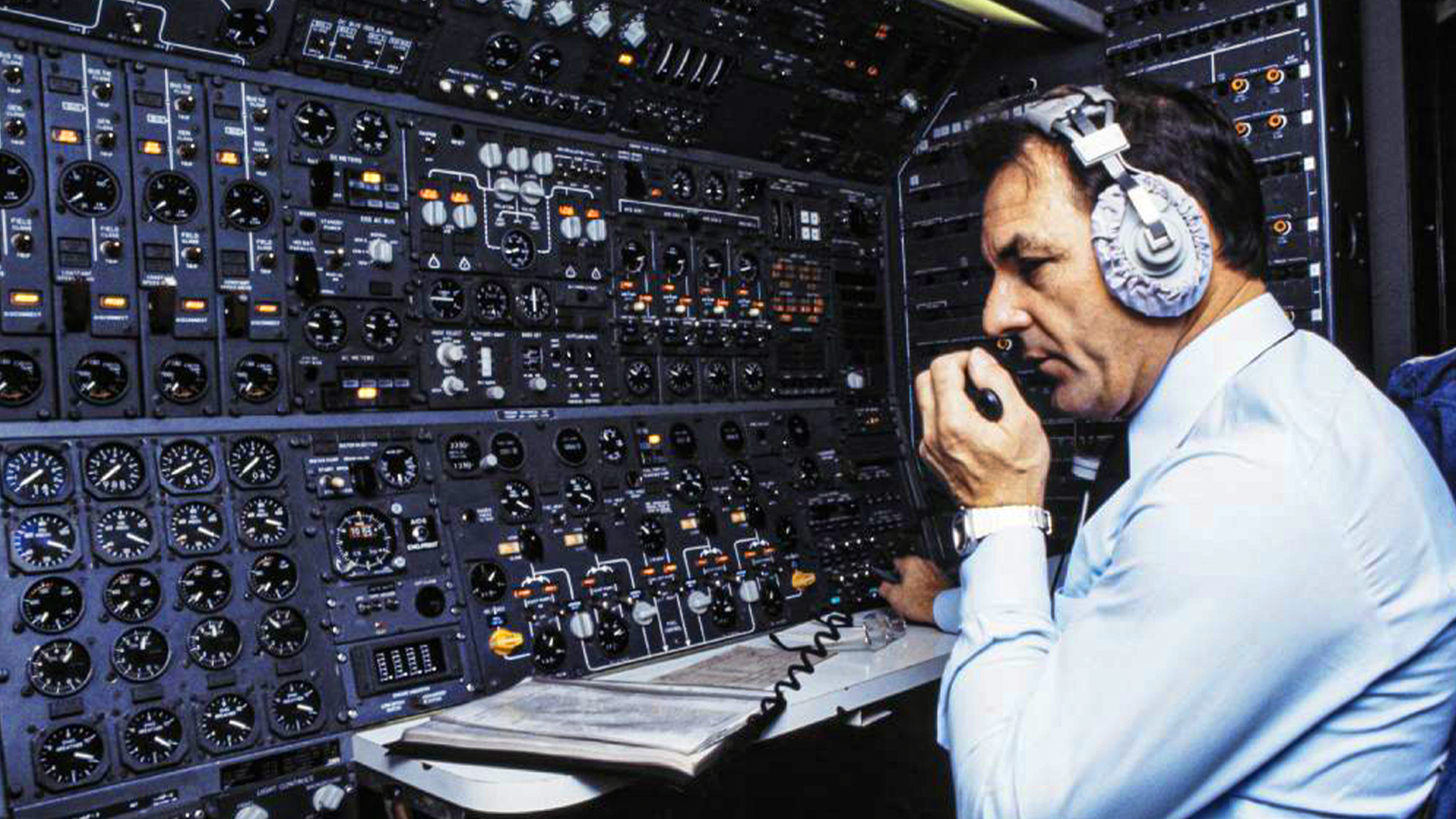
Published Nov 5, 2026, 4:01 PM EST Passionate about promoting aviation, the beauty of flight and the science behind it, Antonio is an avid reader of aviation magazines and books, and he loves visiting airshows all over the world, taking photos and writing about airplanes and helicopters as well. He is currently based in Palermo, Sicily. Sign in to your Simple Flying account A third seat in an airliner’s cockpit can tell you a surprising amount about the machine itself. On some jets the person occupying it was often a flight engineer, responsible for monitoring and managing systems that modern flight crews now take for granted . On others, the job became so closely tied to the aircraft that the engineer’s station was almost as recognizable as the engines or the silhouette. The flight engineer’s place in the cockpit did not disappear overnight, and the aircraft that carried one were far from interchangeable. Some made the role part of everyday long-haul operations; others pushed it into unusual territory. This countdown features ten classic airliners that were designed or operated with three crew members in the cockpit. The selection is based on that crew configuration, rather than requiring every aircraft to use the same title or staffing arrangement for its third crew member. The aircraft are ranked by their historical influence, fleet size, and the lasting place the third cockpit position held in their identity. Douglas DC-6 The piston airliner that established the flight engineer's role The Douglas DC-6 first flew on June 29, 1946, and entered airline service with American Airlines and United Airlines in 1947. More than 700 examples were eventually built, making it one of the most successful large piston-powered airliners of the postwar era. Its four Pratt & Whitney R-2800 radial engines, pressurized cabin, and long-range capability helped airlines expand their domestic and international networks. NASA's aviation history covers the aircraft's introduction and commercial impact. The DC-6's cockpit required a minimum crew of three: a pilot, copilot, and flight engineer. The engineer monitored the four engines and managed the aircraft's systems, taking on responsibilities that would otherwise have added to the pilots' workload. Delta initially operated the aircraft with two pilots, but federal regulations soon required a third cockpit crew member. The Delta Flight Museum documents that change, and the aircraft's operating manual specifies the minimum three-person crew. The DC-6 ranks tenth because it represents the postwar expansion of the traditional three-person cockpit. Its combination of four complex piston engines and long-distance operations made the flight engineer an important part of airline operations, setting the stage for the larger piston airliners and early jets that followed. Douglas DC-8 The jetliner that carried the flight engineer into the Jet Age The Douglas DC-8 first flew on May 30, 1958, and entered commercial service with Delta Air Lines on September 18, 1959. One of the first American jetliners designed for long-range passenger operations, it combined four underwing engines with a pressurized cabin and the speed needed to transform transcontinental and international travel. Douglas eventually built 556 examples, including the stretched Super 60 series. The FAA's historical chronology records the aircraft's development and entry into service, while Boeing's historical archive preserves its first-flight history. The DC-8 retained a three-person flight deck, with a captain, first officer, and flight engineer. Seated behind the pilots, the engineer monitored the four engines and managed systems including fuel, electrical power, hydraulics, and pressurization. The aircraft's type certificate specified a minimum crew of three, making the engineer an integral part of its approved operating configuration. The DC-8 ranks ninth because it brought the traditional flight engineer's station into the first generation of successful American jetliners. Its long passenger and cargo career also showed how enduring that arrangement would be: even as jet technology advanced, the third cockpit position remained standard throughout the DC-8's production life. Lockheed Constellation The elegant four-engined airliner that made the engineer essential Credit: Petr Podrouzek | Shutterstock The Lockheed Constellation first flew on January 9, 1943, initially as a military aircraft, before entering commercial service with TWA in 1946. Its pressurized cabin, long-range capability, and distinctive triple-tail design made it one of the defining airliners of the postwar period. Later versions, particularly the Super Constellation, introduced improved engines and greater operating range. The Smithsonian's Lockheed Constellation collection record documents the aircraft's development and its first flight. The Constellation also helped establish the flight engineer as an important member of the long-distance airline crew. Operating four large piston engines while monitoring fuel distribution, electrical systems, and other aircraft functions demanded considerable technical knowledge. A dedicated engineer's station allowed these responsibilities to be separated from the pilots' flying duties, particularly during lengthy oceanic operations. The Airline History Museum's Constellation archive provides additional aircraft history and restoration information. The Constellation ranks eighth because it helped establish the traditional three-person cockpit as a practical arrangement for long-range commercial aircraft. Its engineer's position represented a growing specialization within airline flight crews. Tupolev Tu-154 The Soviet trijet designed for three, then handed a navigator Credit: Victoria Agronsky | Simple Flying The Tupolev Tu-154 first flew on October 4, 1968, and entered Aeroflot service in February 1972. More than 1,000 were eventually built, making it a standard Soviet and later Russian medium-haul airliner. Its designers wanted a relatively lean flight crew of captain, first officer, and flight engineer, at a time when other Soviet airliners routinely carried four or five people up front. The Tu-154B-2 could be flown by three crew members, because Hungary's Malév judged larger crews economically unacceptable. Simple Flying notes that the Tu-154 filled nearly the same role in the Eastern Bloc that the 727 played in the West. Navigation requirements meant that many Tu-154 operations retained a dedicated navigator in addition to the engineer. The navigator and flight engineer occupied separate workstations, illustrating how cockpit staffing differed between Soviet and Western aviation. The German Federal Bureau of Aircraft Accident Investigation's report on the 2002 Überlingen collision documents the positions of the Tu-154M's navigator and engineer. Crew arrangements varied by operator and version. The Tu-154 ranks seventh because it demonstrates that the three-person cockpit was not a universal solution. Its long production life and continued use of additional specialists highlight the different approaches to cockpit staffing that existed during the jet age. Aérospatiale-BAC Concorde Supersonic speed demanded a full-time systems specialist Credit: Scorbs | Shutterstock BA Concorde first flew on March 2, 1969, and began scheduled passenger service in January 1976 with British Airways and Air France. Its flight crew consisted of a captain, first officer and flight engineer. Cruising at approximately 1,350 mph (2,170 km/h) and reaching altitudes of around 60,000 feet (18,300 m), it presented technical challenges unlike those of an ordinary subsonic airliner. The engineer occupied a dedicated station behind the pilots, monitoring fuel, electrical, hydraulic, air-conditioning, and engine systems. Fuel management was particularly important because fuel was transferred between tanks to control the aircraft's center of gravity as it accelerated and decelerated. Warren Hazelby, a former Lockheed L-1011 flight engineer who later worked on Concorde, described the aircraft's complexity in a CNN interview about his experience operating the supersonic jet. Concorde ranks sixth because it demonstrates how essential the flight engineer could remain even in a technologically advanced aircraft. Only 20 were built, including development aircraft, but the third crew member remained part of its commercial operation until retirement in 2003. Lockheed L-1011 TriStar A technological marvel that still kept its engineer The Lockheed L-1011 TriStar first flew on November 16, 1970, and entered service with Eastern Air Lines in April 1972. Lockheed built 250 examples, and the aircraft became known for its advanced flight-control technology and relatively quiet operation. Despite having an advanced autopilot capable of automatic landings, the TriStar retained a three-person cockpit. Lockheed's own historical account of the L-1011 describes its advanced automatic flight-control system and the technical ambitions behind the aircraft. The flight engineer monitored the aircraft's complex mechanical and electrical systems, including fuel, hydraulics, and engine performance. The importance of crew coordination became particularly evident during Eastern Air Lines Flight 401 in December 1972. While the crew investigated a landing-gear indicator problem, attention shifted away from monitoring the aircraft's flight path. The FAA's account of the Flight 401 accident explains how the crew became distracted while troubleshooting the indicator and failed to monitor the aircraft's flight path. The accident helped shape later thinking about crew resource management. The TriStar's engines brought their own challenges, as the Rolls-Royce RB211 program experienced major development difficulties that delayed the aircraft's introduction. The TriStar ranks fifth because it demonstrated that sophisticated automation did not immediately make the flight engineer redundant. Even one of the most advanced airliners of its generation continued to rely on a dedicated systems specialist. McDonnell Douglas DC-10 A trijet built around three seats The McDonnell Douglas DC-10 first flew on August 29, 1970, and entered service with American Airlines on August 5, 1971. Its flight deck was designed for three people: a captain, copilot, and flight engineer. The engineer occupied a dedicated panel behind the pilots, monitoring systems that included fuel, electrical power, hydraulics, and engine performance. The DC-10 was developed as a widebody trijet, with two engines mounted beneath the wings and a third installed at the base of the vertical tail. This arrangement provided the capacity and range airlines wanted while meeting the long-haul regulatory environment of the period. The flight engineer's responsibilities included monitoring fuel distribution, electrical buses, and hydraulic systems, as well as helping identify abnormal conditions. According to Boeing, the later MD-10 conversion introduced a modern glass cockpit, allowing the removal of the flight engineer's position. The DC-10 ranks fourth because it illustrates both the importance and eventual disappearance of the flight engineer's position. The DC-10's passenger career gradually ended as more efficient widebody aircraft replaced it, although freighter operations continued for decades. Its long service history makes it one of the clearest examples of the transition from traditional three-person flight decks to modern two-pilot cockpits. Boeing 727 The compromise trijet that became a sales phenomenon The Boeing 727 first flew on February 9, 1963, and entered service with Eastern Air Lines on February 1, 1964. It became the first commercial jetliner to pass 1,000 sales, with production eventually reaching 1,832 aircraft before ending in 1984. The type required a three-person flight deck, with the engineer seated sideways behind the pilots. Its distinctive arrangement of three rear-mounted engines allowed Boeing to deliver the performance airlines wanted without placing engines beneath the wings. The aircraft's integrated rear airstair and sophisticated high-lift system also made it attractive for operations at airports with limited ground facilities and relatively short runways. The 727's third engine emerged from a compromise among United Airlines, American and Eastern. United wanted strong performance at hot-and-high airports such as Denver, while Eastern needed an aircraft suitable for overwater operations. Many smaller airports offered runways of just 4,500 feet (1,372 m), which the 727's triple-slotted flaps helped it handle. Its systems remained complex enough to require a dedicated engineer, who monitored engine instruments and the fuel, electrical, and hydraulic systems. Boeing's historical aircraft collection provides further information about the aircraft's development and its remarkable production run. The 727 ranks third because its flight-engineer era stretched across decades of everyday flying. It became a familiar sight at airports around the world, and its long freighter career kept the third cockpit seat in use well after newer passenger jets had moved toward two-pilot operations. FedEx retired its final 727s in 2013, marking the end of a particularly important chapter in the company's freighter fleet. For many airline pilots and engineers, the 727 remained one of the defining aircraft of the traditional three-person cockpit. Boeing 707 The jetliner that started the three-person era The Boeing 707 opened the jet age for most travelers. Developed from the Boeing 367-80 prototype, the first production 707-120 flew on December 20, 1957, and FAA certification followed on September 18, 1958. Pan Am began regular service on October 26, 1958, with a transatlantic flight from New York to Paris. Boeing eventually delivered more than 1,000 aircraft across the 707 family, including the smaller 720. The aircraft's four turbojet engines and long-range capabilities made it one of the most influential commercial transports ever built. Its cockpit was designed around a captain, first officer, and flight engineer, establishing a layout that would become familiar throughout the first generation of jet airliners. The engineer's workstation was particularly important during the 707's early years. The aircraft's systems required continuous monitoring, including fuel management, electrical power, hydraulics, and pressurization. The engineer also assisted the pilots during engine start and monitored the four engines throughout the flight. Pan Am's Clipper America helped establish the aircraft's international reputation, and the 707 quickly became a symbol of the new era of commercial aviation. Its military derivatives extended the design's life considerably, with aircraft such as the E-3 Sentry continuing to use flight engineers long after most passenger airlines had moved to newer designs. The Pan Am Historical Foundation's account of the airline's first 747 also provides useful context for the transition from the early jet age to the widebody era. The 707 ranks second because it helped establish the standard for the first generation of long-range jetliners. The 727, 747, and DC-10 that followed inherited the same three-person philosophy, and the 707 proved that jet aircraft could operate profitably on major international routes. Its influence extended far beyond passenger service, with military derivatives continuing to fly for decades. The 707's engineer station became a familiar feature of the early jet age, making it one of the most historically significant aircraft on this list. Boeing 747 Classic Variants The jumbo jet with a sideways seat Credit: Victoria Agronsky | Simple Flying The Boeing 747 made its first flight on February 9, 1969, with Brien Wygle as copilot and Jess Wallick as flight engineer. Pan Am launched passenger service on January 22, 1970, on a New York–London flight. The Boeing 747-100 was designed to carry approximately 366 to 452 passengers, depending on configuration, and its introduction transformed the economics of long-distance air travel. Behind the pilots, the engineer faced sideways toward a large collection of panels. The aircraft's size and complexity demanded continuous attention to fuel pumps, electrical buses, pressurization, hydraulics, and air conditioning, tasks that two pilots would have struggled to manage alongside their flying responsibilities. Boeing's official 747 history documents the first flight, the aircraft's development, and the beginning of passenger service. The flight engineer's role on the 747 was particularly recognizable because of the dedicated sideways-facing station. Boeing's early jumbo jets contained numerous switches, lights, and gauges, and the engineer monitored systems that extended throughout the aircraft. Typical duties included operating fuel pumps, managing fuel transfer, monitoring electrical systems, and coordinating the use of backup systems when required. The position remained a standard feature on the 747-100, Boeing 747-200 and Boeing 747-300, but the introduction of the Boeing 747-400 in 1989 changed the arrangement. Its Engine Indicating and Crew Alerting System, together with more advanced digital displays, allowed the aircraft to operate with two pilots instead of three. The Pan Am Museum Foundation's history of the jumbo jet provides additional background on the aircraft's introduction and its impact on international travel. The classic 747 earns the top spot because it fused scale, symbolism, and the traditional flight engineer's role. Boeing built more than 1,500 747s across the aircraft's production history, and the engineer's sideways seat became the best-known example of the third crew position. The jumbo jet represented the peak of the traditional widebody cockpit, but it also demonstrated how quickly that arrangement could become outdated. Automation, digital displays, and integrated warning and monitoring systems eventually allowed newer aircraft to receive certification for two-pilot operations. The 747-400's introduction marked one of the clearest turning points in that transition, bringing the classic three-person cockpit era closer to its end.
10 Classic Airliners That Needed A Third Person In The Cockpit
Full Article
Original Source
Read the full article at Simpleflying →KhanList aggregates and links to publicly available news content. We do not host full articles from third-party sources. Always verify important information with original sources.