
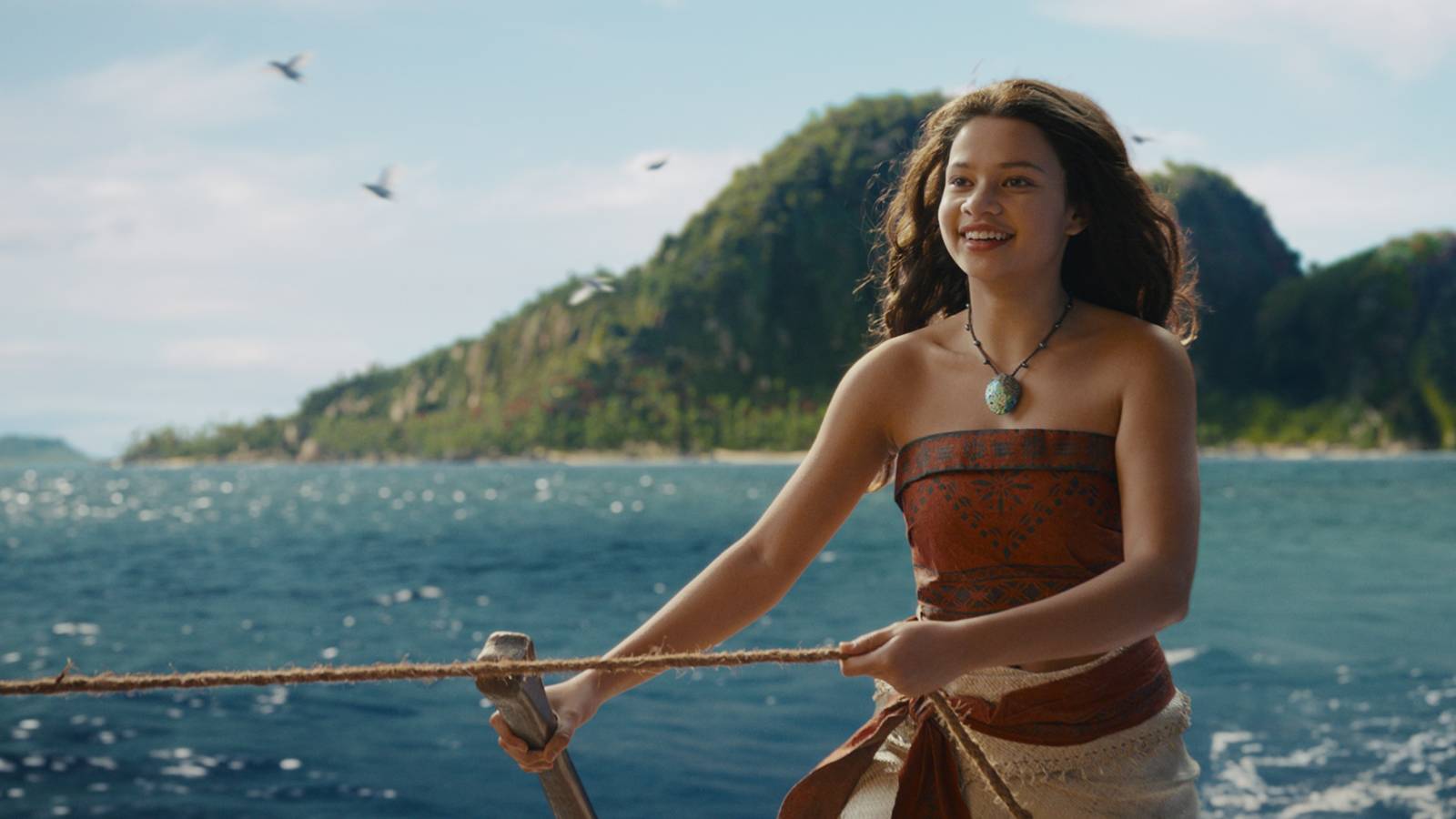
Published Oct 21, 2026, 2:32 PM EDT Senior Music Editor at Screen Rant, Sarah's love of sound and story drive the beat. A globetrotting brand whisperer and award-winning journalist, she’s built cross-cultural narratives around the world—but music has always been her true north. She launched DJ Mag North America, successfully introducing the iconic UK brand to the U.S. market. Previously, she carved a space for EDM inside the pages of VIBE, blending electronic and hip-hop culture long before it was trendy. Summary Disney remade Moana after only 10 years, prompting doubts about whether the live-action was necessary. Catherine Lagaʻaia brings warmth and grounded Moana; added family beats deepen emotion but some village charm fades. Songs and the climax still soar, but photoreal ocean, Maui's toned-down humor, and visuals fall short. 10 years is barely enough time for a Disney classic to develop nostalgia, yet Moana has already sailed through an animated debut, a billion-dollar sequel, and a live-action remake. Now that the latter has arrived on Disney+, there's an opportunity to reconsider whether returning to Motunui so soon was a good idea. Directed by Thomas Kail, the 2026 remake stars Catherine Lagaʻaia as the adventurous young heroine, with Dwayne Johnson returning as Maui. The movie follows essentially the same story as the beloved 2016 original, complete with familiar musical numbers, spectacular ocean adventures, and an unforgettable collection of eccentric characters. The decision to revisit such a recent success was controversial from the beginning. Disney has an extensive animated library, including several classics that arguably deserve live-action remakes considerably more than Moana. The film's disappointing critical reception did little to resolve questions about whether this particular adaptation was necessary. Yet watching the two versions in close succession reveals some interesting distinctions. Lagaʻaia brings a different energy to the central role, certain family relationships receive more attention, and several familiar sequences gain considerable emotional weight. At the same time, the transition from animation comes with sacrifices that become increasingly difficult to ignore. As ScreenRant's review of the live-action Moana observed, the remake struggles to recapture some of the original's magic. With both versions now available on Disney+, these 10 takeaways reveal where the filmmakers succeeded, what they left behind, and why the animated adventure remains such a formidable act to follow. Disney Really Did Remake A Movie That Was Only 10 Years Old Disney's animated Moana premiered in November 2016, making the decision to release a live-action version in July 2026 particularly unusual. Most of the studio's previous remakes arrived decades after their animated counterparts, allowing filmmakers to introduce beloved characters to generations who hadn't experienced their original theatrical releases. Here, the comparison is unavoidable because the original remains so familiar. As the history of Disney's live-action remakes demonstrates, the most interesting adaptations often find a compelling reason to revisit their source material. Moana largely relies on affection for a movie audiences already love, raising the question of whether visual realism alone provides enough justification. Catherine Lagaʻaia Is The Remake's Greatest Strength Taking over a role made famous by Auliʻi Cravalho was never going to be easy, particularly when the original Moana remains one of Disney's most beloved modern heroines. Fortunately, Catherine Lagaʻaia brings genuine warmth and determination to the character, capturing her adventurous spirit without simply reproducing Cravalho's animated performance. Lagaʻaia's natural presence is particularly valuable when the surrounding spectacle threatens to overwhelm the story. Her performance gives Moana's growing confidence a recognizable human quality, allowing the character's uncertainty to register in ways that animation approaches differently. As the remake's casting decisions illustrate, finding the right Moana was arguably more important than recreating any spectacular visual effect. Gramma Tala's Death Is Even More Heartbreaking Gramma Tala has always been the emotional heart of Moana, encouraging her granddaughter to embrace the ocean when everyone else insists she remain on Motunui. Rena Owen inherits the role from Rachel House, delivering a deeply affectionate performance that gives the relationship an especially touching sense of intimacy. The live-action remake spends additional time with Tala during her final moments, allowing the grandmother-granddaughter relationship to resonate before Moana begins her journey. That extended farewell lends greater emotional weight to her eventual spiritual return. Considering how faithfully the movie recreates many other sequences, this relatively modest adjustment demonstrates the value of giving its characters additional room to breathe. Chief Tui's Fear Of The Ocean Makes More Sense Chief Tui's refusal to let his daughter venture beyond the reef initially appears overly controlling, particularly when Moana clearly possesses the instincts of a natural navigator. The original movie eventually reveals that his fears stem from a traumatic boating accident during his youth. The remake gives that history a somewhat more personal dimension. John Tui's interpretation of the character is less confrontational, while additional details connect his past experiences to the family's relationship with their seafaring ancestors. The person who died during his childhood voyage is also identified as his cousin rather than his best friend. These changes help transform Tui from a familiar overprotective Disney father into a man whose fears are rooted in personal loss. Dwayne Johnson's Maui Feels More Human, But Less Funny Dwayne Johnson occupies an unusual position in Disney's remake, having already established Maui's personality through his voice performance in the animated original. His return provides welcome continuity, especially during exchanges with Moana, but translating the enormous demigod into a physical performance creates an entirely different set of challenges. The animated Maui could exaggerate every gesture and facial expression, making his vanity and insecurity wonderfully entertaining. Johnson's live-action portrayal is comparatively restrained, emphasizing the character's exhaustion and vulnerability. While that introduces some welcome humanity, it also makes the demigod feel less larger-than-life. The challenges of bringing Maui into live action underline how difficult it is to reproduce a character designed specifically for animation. The Songs Remain Wonderful, Even When The Visuals Don't Lin-Manuel Miranda's songs were among the greatest strengths of the animated Moana, and the remake wisely preserves its most recognizable musical numbers. "How Far I'll Go" remains a terrific showcase for its heroine, while Johnson gets another opportunity to perform "You're Welcome" and Jemaine Clement returns as the voice of Tamatoa. However, the accompanying visuals don't always match the imagination of the original. Maui's musical sequences lean toward more physical imagery, with sand figures and rock formations replacing some of the earlier film's animated flourishes. It's entertaining enough, but comparing the two versions reveals how animation allowed the songs to escape the limitations of the physical world. Motunui Looks Beautiful, But Some Of Its Personality Is Missing The live-action remake surrounds Moana with spectacular tropical landscapes, elaborate costumes, and a more tangible representation of her island community. Seeing performers inhabit Motunui offers a different appreciation of the cultural world that inspired Disney's original adventure, particularly during the scenes involving traditional navigation and the island's history. Unfortunately, some of the smaller character moments that made the animated village memorable receive considerably less attention. Moana's mother, Sina, has a reduced presence, while several colorful villagers become background figures. The remake also gives audiences additional glimpses of the destruction threatening Motunui, strengthening the urgency of Moana's mission but sacrificing some of the original setting's playful personality. The Ocean Still Looks Better In Animation Making the ocean a character was one of the original Moana's most imaginative decisions. Its waves could tease the heroine, respond to her emotions, and behave with the exaggerated personality of an animated sidekick. The live-action remake creates an impressive digital ocean, but translating that playfulness into a more realistic environment proves considerably harder. The difference is apparent during Moana's childhood encounter with the water, which loses some of the elaborate visual comedy of the animated sequence. Even Heihei and Pua face the limitations of photorealistic CGI, with Pua receiving comparatively little attention. The ocean frequently looks spectacular, yet the animated version remains more expressive because its filmmakers could allow nature to behave however they imagined. The Final Battle With Te Kā Is More Frightening Moana's confrontation with Te Kā has always been a spectacular sequence, bringing her journey to an emotional and visual climax. In the live-action remake, the enormous lava monster becomes a particularly intimidating presence, towering above the fragile canoe as Maui attempts to hold back its destructive power. The heightened realism makes the danger feel more immediate, especially when Moana must confront the creature without relying on conventional violence. Yet the scene's greatest achievement remains the same as in 2016: recognizing that the apparent villain is a wounded being who needs restoration rather than destruction. It's a wonderful conclusion that Disney wisely preserves, even as the spectacle becomes more intense. The New Ending Gives Moana's Journey A Different Kind Of Closure One of the remake's more meaningful additions comes when Moana is formally recognized as a leader alongside her father. The original concludes with her embracing her people's voyaging heritage, but the live-action version makes her transition into leadership more explicit. Her decision to place a conch shell among the chiefs' stones also reinforces her connection to the ocean. There's another touching addition during the closing credits: "Along the Way," a new song featuring Lagaʻaia, Johnson, and original Moana voice actress Auliʻi Cravalho. It's a fitting acknowledgment of the relationship between the two films, even if the remake never quite surpasses its predecessor. Ultimately, the biggest takeaway from revisiting Moana is how remarkably well the original understood its heroine the first time around. Release Date July 10, 2026 Runtime 120 Minutes Director Thomas Kail
10 Biggest Takeaways Rewatching Disney's Live-Action Moana Remake Now That It's On Streaming
Full Article
Original Source
Read the full article at Screenrant →KhanList aggregates and links to publicly available news content. We do not host full articles from third-party sources. Always verify important information with original sources.