
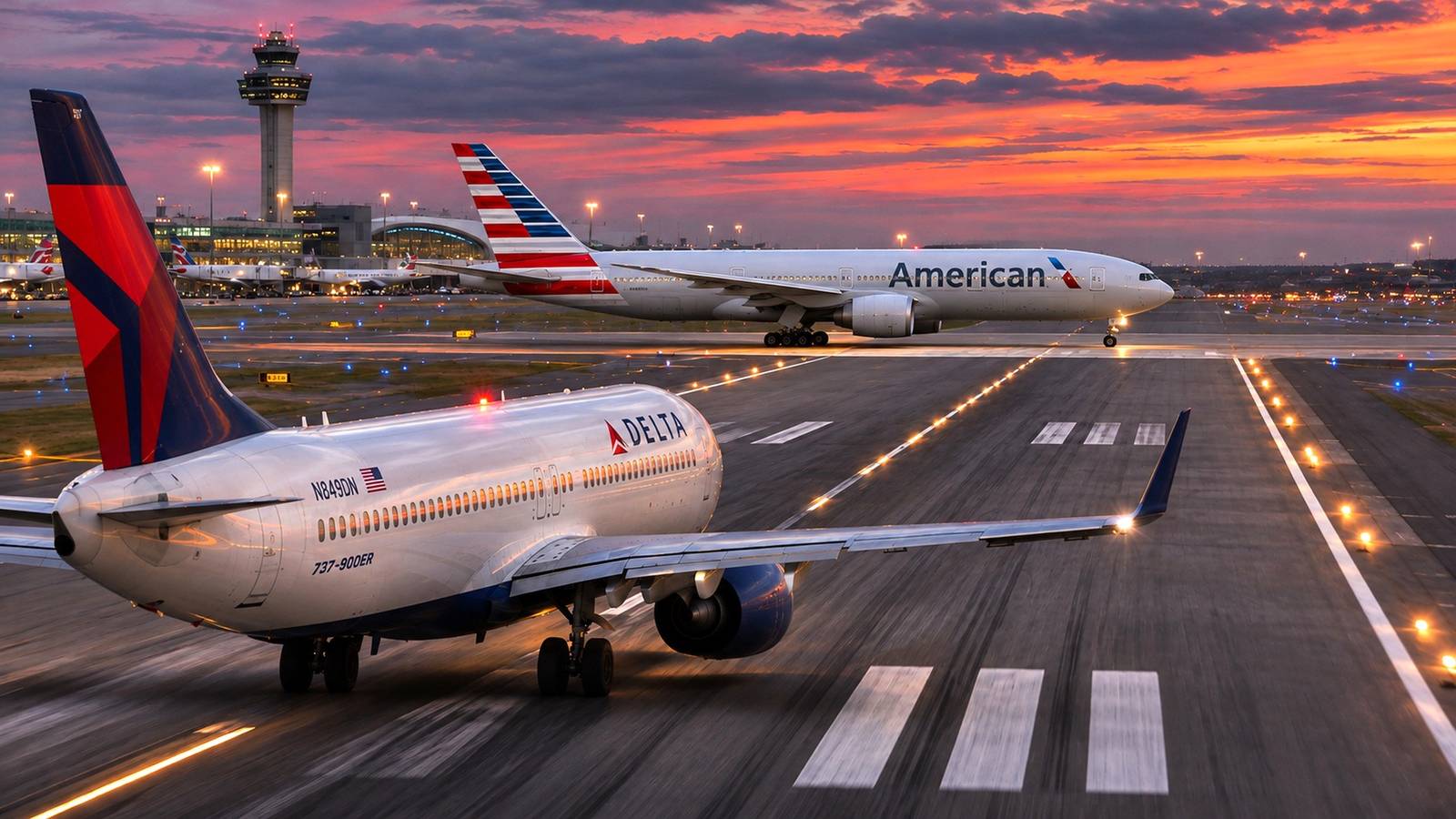
Published Nov 20, 2026, 11:13 AM EST Paul has had a career of 25+ years focused on the international technology sector, which has taken him to over 100 countries. Along the way, he developed a deep love for aviation, with a travel bucket list measured by aircraft types flown rather than destinations reached. Now he brings that avgeek passion, along with the journalism experience he accumulated early in his career, to write insightful pieces for Simple Flying. The Federal Aviation Administration (FAA) has issued new safety guidance calling on airline pilots to verbally identify runways before crossing them, addressing a seemingly minor cockpit oversight that nearly resulted in a catastrophic collision at New York's John F. Kennedy International Airport (JFK). The November 18 recommendation introduces an additional safeguard against pilots inadvertently entering active runways. The change follows a January 2023 incident in which an American Airlines Boeing 777 crossed directly into the path of a departing Delta Air Lines Boeing 737-900ER. The Delta pilots rejected takeoff at approximately 105 knots (121 mph; 195 km/h), narrowly avoiding a collision involving aircraft carrying 308 people. Investigators subsequently discovered that a simple verbal cross-check might have prevented the entire incident. The FAA Wants Pilots To Say One Simple Thing Credit: Vytautas Kielaitis | Shutterstock Under FAA Information for Operators 26016, pilots should announce the runway number shown on airport signs before crossing it. The recommendation applies to Part 121 commercial airlines, Part 135 charter operators, and Part 91K fractional operators. It is voluntary guidance, rather than a legally binding requirement, and allows exceptions where equivalent automated aural advisory systems are installed. The procedure is straightforward. A crew cleared to cross Runway 31L should visually check the approaching runway sign and announce its number. If the sign instead identifies Runway 4L, the discrepancy could reveal a navigational error before the aircraft enters an active runway. The FAA believes this additional check could reduce mistakes caused by distractions and multitasking during taxi operations. The recommendation directly addresses findings from the National Transportation Safety Board (NTSB) investigation into the JFK incident. Investigators concluded that checking runway signs aloud would provide an extra opportunity to detect an incorrect turn, complementing existing procedures requiring crews to visually check for approaching aircraft. The FAA explained the value of this additional safeguard: "This practice serves as a double-check mechanism, confirming intended actions and preventing misunderstandings regarding clearances." How An American Airlines 777 Nearly Collided With A Delta 737 Credit: Eliyahu Yosef Parypa | Shutterstock On January 13, 2023, American Airlines Flight 106, operated by Boeing 777-200 N754AN, was taxiing at JFK for a flight to London Heathrow Airport (LHR). Meanwhile, Delta Flight 1943, operated by Boeing 737-900ER N914DU, was preparing to depart for Santo Domingo. American's crew had been instructed to cross Runway 31L via Taxiway K, but missed the required turn, continuing toward Runway 4L instead. At approximately 8:44 PM, the American aircraft turned onto Taxiway J as Delta began accelerating down Runway 4L. JFK's Airport Surface Detection Equipment, Model X (ASDE-X), detected the conflict and warned controllers. The local controller immediately canceled Delta's takeoff clearance. The following timeline, reconstructed from the NTSB's investigation, demonstrates how quickly events unfolded: Time (EST) Event 8:44:15 PM American misses the turn onto Taxiway K 8:44:30 PM American turns onto Taxiway J; Delta begins takeoff 8:44:40 PM American reaches the runway holding line 8:44:42 PM ASDE-X alerts the control tower 8:44:47 PM Controller cancels Delta's takeoff clearance 8:44:51 PM Delta initiates rejected takeoff 8:44:53 PM Delta reaches approximately 121 mph (195 km/h) 8:45:02 PM American clears Runway 4L 8:45:23 PM Delta stops short of the intersection The Delta aircraft eventually stopped approximately 500 feet (152 meters) short of the intersection, having reached its maximum speed just 2,300 feet (700 meters) from where American was crossing. Neither aircraft sustained damage, and all 308 occupants escaped injury. The NTSB concluded that the controller's intervention, prompted by ASDE-X, likely prevented a catastrophic accident reminiscent of the Tenerife Airport Disaster. Why Existing Safeguards Failed To Prevent The Close Call Credit: Austin Deppe | Shutterstock The investigation's most revealing finding was that the American crew had performed their normal crossing checks. According to interviews, the captain announced "cleared to cross" and "clear left," while the first officer responded "clear right." However, neither apparently verified the runway number against airport signage. Investigators found that the signs should have been visible for approximately ten seconds. The cockpit voice recording had been overwritten, so the precise exchanges could not be independently verified. Investigators attributed the error to distractions, multitasking, and a loss of situational awareness. The crew was dealing with delayed weight-and-balance paperwork, while the captain followed a familiar but incorrect taxi route. Runway entrance lights also activated too late to prevent the incursion. Although ASDE-X successfully alerted controllers, the NTSB also called for technology capable of warning pilots directly about approaching aircraft and runway conflicts. The JFK near-collision was not an isolated warning about runway safety. Less than a month later, Southwest Airlines and FedEx aircraft narrowly avoided a collision at Austin, demonstrating the importance of multiple safeguards. The FAA's latest recommendation cannot eliminate every runway incursion, but it addresses a particularly preventable mistake: pilots checking that a runway is clear without first confirming it is the correct one.
1 Simple Callout: The New Fix For The Error That Put An American 777 In A Delta 737’s Path
Full Article
Original Source
Read the full article at Simpleflying →KhanList aggregates and links to publicly available news content. We do not host full articles from third-party sources. Always verify important information with original sources.